 LAIINA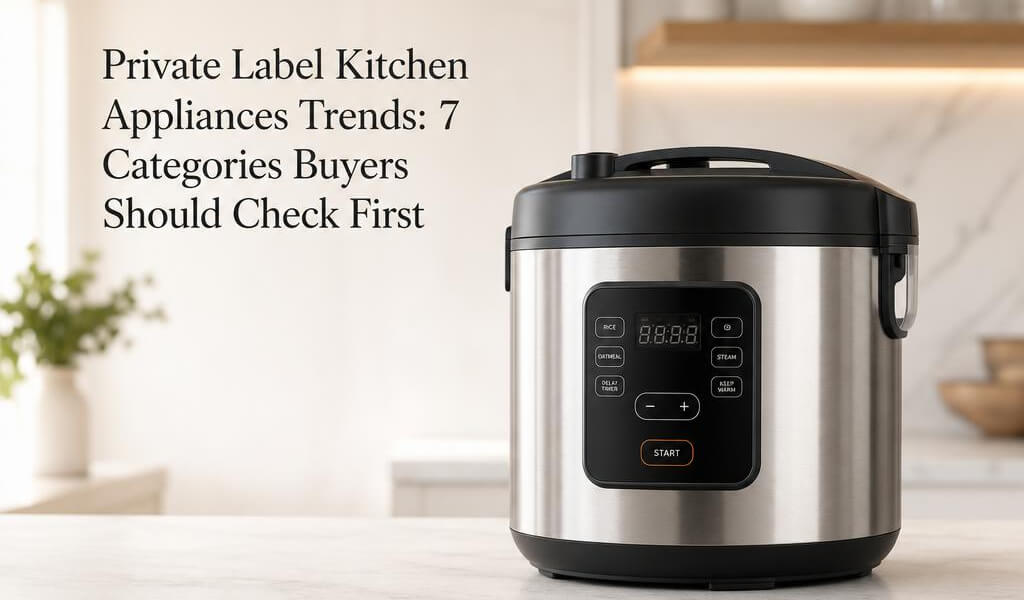
Private label kitchen appliances trends are not only about colors, smart functions, or social media demand. For B2B buyers, the real question is which categories are easier to source, safer to standardize, and more practical for wholesale, OEM, or ODM programs.
Related product directory: Explore Laiina General Small Kitchen Appliances options for wholesale and OEM/ODM projects. Buyers can compare suitable models and send voltage, plug, quantity and packaging requirements.
If you are building a house brand or expanding an existing appliance line, category selection matters as much as pricing. A blender, air fryer, and kettle may all sell well, but each one has a different sourcing risk, packaging need, voltage issue, and after-sales workload.
This guide looks at seven common small appliance categories from a buyer’s side. The focus is simple: what to check before you ask for a quotation, sample, or private label offer from a supplier.
The most useful way to evaluate private label kitchen appliances trends is by category, not by hype. Buyers should compare each product type by compliance requirements, voltage and plug fit, packaging size, spare parts risk, quality check points, and after-sales difficulty before placing a wholesale or OEM order.
Why category choice matters more than trend talk
Many trend articles focus on what consumers like this year. Importers and distributors need a different filter. A product can look popular online but still create problems if the carton is too large, the return rate is high, or local plug standards are not confirmed early.
For private label buyers, the best category is often the one that balances demand with manageable execution. That means stable quality, clear user instructions, suitable packaging, and a product spec that can be repeated across batches.
If you are reviewing a small kitchen appliance supplier, ask for category-level information first. It saves time before moving into branding, artwork, or final price discussion.
7 categories to review under private label kitchen appliances trends
1. Air fryers
Air fryers stay active in many markets because they fit the healthy cooking angle and work well in retail displays. For buyers, the main checkpoints are basket coating consistency, temperature control, timer accuracy, odor during first use, and carton protection for the outer shell.
Also check rated power, voltage options, plug type, and user manual language. Air fryers usually need more attention on size, packaging volume, and after-sales parts such as baskets or trays.
2. Kitchen blenders
Blenders are common in wholesale programs, but sourcing details matter. Buyers should check motor performance, blade material, jar material, lid fit, noise level, and run-time stability.
If your target market includes home retail and online sellers, packaging drop resistance matters a lot. Spare part availability for jars, lids, and seals should be discussed before mass production.
3. Electric kettles
Electric kettles are often a practical entry category for private label programs because the function is clear and the product message is easy for consumers. Still, buyers should review heating base contact, auto shut-off function, inner material, water gauge clarity, handle temperature, and cable storage.
For this category, importers should be careful about local market expectations for body finish, capacity, and plug style. Ask what can be adjusted for brand positioning without changing the core structure too much.
4. Rice cookers and pressure cookers
These products can work well for distributors in markets where rice cooking is part of daily use. They also require closer attention to inner pot coating, lid seal, button layout, heating consistency, and packing protection.
Pressure-related models may need a more careful document review depending on the destination market. Buyers should ask which test items, warning labels, and instruction points need to be prepared as part of the sourcing process.
5. Food processors
Food processors are useful for buyers targeting multi-function demand, but they bring more component checks. Bowls, blades, locks, feed tube design, motor load, and accessory count all affect both cost and after-sales handling.
When reviewing private label kitchen appliances trends, this category often looks attractive because of its wider use case. But more parts can also mean more packaging checks, more missing-part claims, and more customer service work after shipment.
6. Portable juice blenders
This category is often driven by convenience, gifting, and online retail. Buyers should check cup sealing, charging method, battery-related handling where applicable, blending strength, leak prevention, and carton labeling.
For cross-border sellers, this is one category where transport and packaging details should be confirmed very early. Product positioning is simple, but shipment rules can be less simple depending on the market and channel.
7. Meat grinders or fufu machines
These products can be strong in regional markets where food habits support repeat demand. The sourcing focus should be on motor stability, metal contact parts, assembly fit, cleaning convenience, and whether replacement parts can be ordered later.
For distributors, this category deserves extra attention on user instructions and service parts. A lower purchase price does not help much if after-sales questions become frequent.
A compact sourcing checklist by category
| Category | Main buyer check | Common risk point |
|---|---|---|
| Air Fryer | Heating control, basket coating, carton size | Bulky packaging and surface damage |
| Blender | Motor, blades, jar fit, spare parts | Breakage and noise complaints |
| Electric Kettle | Auto shut-off, inner material, handle safety | Mismatch on plug or finish expectation |
| Rice/Pressure Cooker | Inner pot, lid seal, control accuracy | Instruction and compliance detail gaps |
| Food Processor | Accessory count, lock system, blade packing | Missing parts and return handling |
| Portable Juice Blender | Sealing, charging setup, labeling | Transport and packaging issues |
| Meat Grinder/Fufu Machine | Motor load, metal parts, cleanability | After-sales parts demand |
What to ask a supplier before OEM or private label development
Once you narrow down the category, move to project questions. Ask what parts can carry your brand, what packaging customization is possible, what voltage and plug options are available, and how samples are arranged for approval.
You should also ask how the supplier handles quality check points before shipment. Good questions include incoming material checks, function testing, visual inspection, packing verification, and how defects are reported if they appear after arrival.
If you plan to build your own line, review the supplier’s OEM/ODM kitchen appliances process early. It helps clarify artwork files, packaging approval, instruction manual updates, and product configuration before bulk order confirmation.
Buyer mistakes that often cause delays or claims
One common mistake is choosing products only by appearance. A matte finish, digital panel, or extra accessory may look good in a catalog but can add sourcing steps, packing changes, or service issues that were not included in the first quotation.
Another issue is incomplete market specification. If the importer does not confirm voltage, frequency, plug type, carton marks, language, and packaging format at the RFQ stage, the back-and-forth can delay samples and production planning.
It is also risky to ignore after-sales. Even simple appliances need a plan for manuals, replacement parts, and product issue feedback. Buyers comparing wholesale kitchen appliances should treat after-sales readiness as part of the sourcing cost, not as an afterthought.
the supplier works in categories where these practical checks matter more than trend headlines. For buyers, that usually leads to smoother quoting and better product selection.
FAQ
What do private label kitchen appliances trends really mean for B2B buyers?
For B2B buyers, private label kitchen appliances trends should be read as product categories that are suitable for repeat wholesale supply, branding, and channel demand. The key is not just what looks popular, but what can be sourced with stable specifications, suitable voltage and plug options, practical packaging, and manageable after-sales support.
Which small kitchen appliance category is usually easier to start with for private label?
Many buyers start with simpler-use items such as electric kettles or standard blenders because product positioning is clear and branding is straightforward. Even then, you still need to confirm core points such as material, power rating, packaging details, user manual language, and the quality check process before moving into a bulk order.
What should I ask a manufacturer before requesting a quotation?
Ask for product specifications, available voltage and plug versions, packaging dimensions, branding options, sample process, and inspection points. If your market has specific requirements, ask what compliance documents should be checked on the buyer side, such as CE, CB, RoHS, LFGB, ETL, or UL depending on the category and destination market.
How can I reduce risk when following private label kitchen appliances trends?
Reduce risk by selecting categories with clear demand and lower service complexity, then confirm every market detail early: logo position, packaging artwork, carton marks, plug type, manuals, spare parts, and final sample approval. It also helps to work with a supplier that can discuss OEM or ODM steps clearly before production starts.
Private label kitchen appliances trends are useful only when matched with sourcing reality. If you are comparing categories for wholesale, OEM, or ODM supply, start with the checklist above, review the product range carefully, and move forward with clear specifications.
To discuss your project or request product information, you can contact the supplier here: send an inquiry.
For model selection and B2B quotation, review Laiina’s General Small Kitchen Appliances product directory.
For private label projects, buyers can also review Laiina’s OEM/ODM kitchen appliance service.
Need General Small Kitchen Appliances Options for Your Market?
Send Laiina your target quantity, market, voltage, plug type, logo and packaging requirements for B2B quotation support.