 LAIINA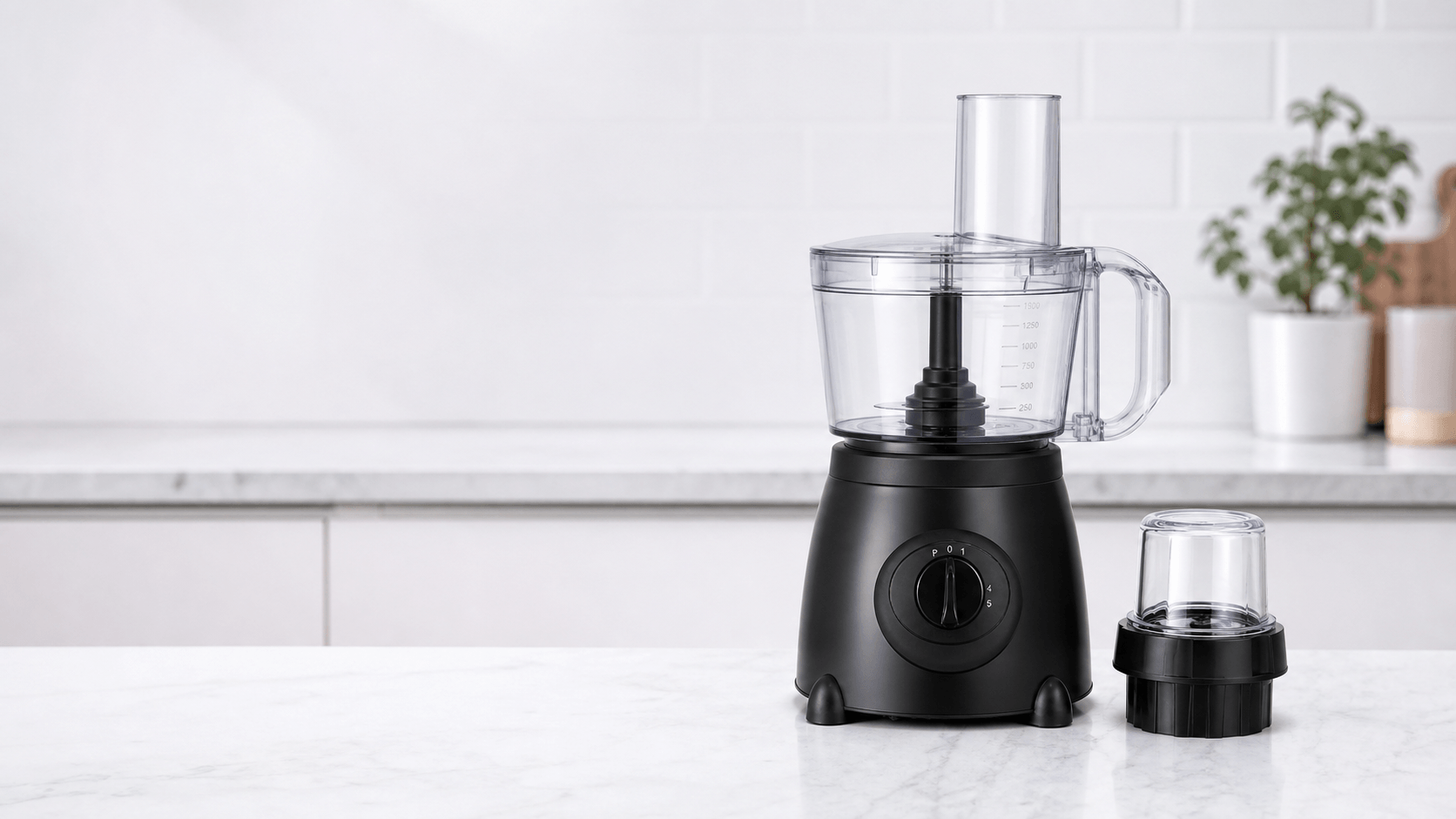
A distributor can lose margin before a food processor ever ships if the quote looks low but leaves out sample charges, packaging, or freight assumptions. That risk shows up quickly when you are pricing for a retail chain, an online store, or a regional wholesale program with tight target margins. Before you place a volume order, the quote should match your market, your voltage needs, and your packaging standard.
If you are reviewing a food processor wholesale supplier, start by asking what is included in the unit price and what is billed separately. The fastest way to avoid surprise costs is to confirm the MOQ tier, sample cost, branding fee, carton details, and shipping term in writing.
A clear food processor wholesale quote should show the product spec, MOQ tier, sample charge, packaging scope, and shipping basis used for pricing. It should also show what changes the price for your market, such as voltage, plug type, manual language, or branded packaging.
If those details are missing, the quote is not ready for a bulk buying decision. Ask the supplier to itemize every cost before you compare vendors.
What Should Be Inside a Food Processor Wholesale Quote?
A quote is only useful when it shows the same scope from supplier to supplier. Otherwise, one offer can look cheaper simply because it leaves out a part, a package upgrade, or a service you still need later. That makes direct comparison difficult for distributors and importers.
Before you approve anything, ask for a written quote that separates the product cost from support costs. That gives you a cleaner view of unit price versus order risk.
| Quote item | What you should confirm | Why it matters |
|---|---|---|
| Unit price | Price by MOQ tier and product version | Shows whether the quote is truly competitive |
| Sample cost | Sample fee, shipping, and refund rule | Protects your approval budget |
| Packaging scope | Retail box, carton, manual, label | Prevents hidden packaging charges |
| Shipping basis | EXW, FOB, or other trade term | Changes your landed cost calculation |
If you are still comparing models, review the food processor range first so your RFQ matches the exact item you want to source.
How Do MOQ, Tiered Pricing, and Sample Costs Affect Your Order?
MOQ affects more than your first order size. It also changes your unit price, sample policy, and whether the supplier will support your preferred packaging format. A quote with a lower price at a higher MOQ may still work if your sell-through is strong, but it should still be measured against your storage and cash flow.
Ask the supplier to show at least two pricing tiers so you can see where the step-down starts. Then check whether the sample cost is separate from the order price, especially if you need more than one version for approval.
- Confirm the MOQ for the base model and for any upgraded version.
- Ask whether the sample price changes if you request a custom logo or color.
- Check whether sample freight is included or billed to your account.
- Request the price difference between standard packaging and retail-ready packaging.
This step matters for distributors who need to protect margin before committing warehouse space.
Which OEM, Packaging, and Branding Charges Should You Confirm?
Branding charges can change the total order value quickly, especially if you need printed boxes, logo placement, or custom inserts. For a private label launch, do not assume the base unit price includes those details. Clarify whether the quote covers only the appliance or the full branded presentation.
If your plan includes OEM or private label work, ask for a separate cost line for each change and compare it against your target market. For reference, you can also review the OEM/ODM process before you request a branded quotation.
Confirm these points before you approve the design stage:
- Logo application method and cost.
- Retail box artwork, manual language, and label format.
- Any carton strength upgrade needed for export shipping.
- Whether custom packaging changes lead time or minimum order terms.
These details help you avoid rework after approval and reduce the chance of mismatched packaging in your destination market.
What Should You Check on Lead Time and Shipping Terms?
Lead time is not just a factory calendar number. It should include sample approval, packaging confirmation, production, inspection, and dispatch. If a supplier gives you only a short production window without explaining the full process, your launch schedule may slip later.
Ask how the supplier handles peak demand, whether your order is scheduled after sample approval, and which shipping terms are being quoted. A price that looks attractive under EXW may become less useful once you add freight, local handling, and import charges.
For global buyers, voltage and plug type also matter here. If your market needs a specific plug standard or a 110V/220V version, confirm that the quote covers the right configuration before production starts.
How Do You Compare Landed Cost Across Suppliers?
Landed cost is the number that matters most to your margin. It combines the product price, packaging, sample expense, freight, duties, local charges, and any conversion costs tied to your market. A supplier with a slightly higher factory price may still be the better fit if the quote is cleaner and the packaging is export-ready.
Use the same assumptions for every offer you receive. That means the same MOQ, the same voltage, the same carton requirement, and the same shipping term. If one supplier includes a stronger outer carton or a translated manual, note it before you call that quote expensive.
Good comparison variables include:
- Target market and power standard.
- Plug type and voltage.
- Carton strength and drop protection.
- Manual language and carton labeling.
- Sample approval steps and spare parts availability.
What Should Go Into Your RFQ Before You Order?
A strong RFQ saves time and helps a food processor wholesale supplier give you a quote you can actually use. The more precise your request, the fewer surprises you face later in pricing, packaging, or shipping.
Before you send the request, confirm these items in one message so suppliers can quote on the same basis:
- Product model or specification sheet.
- Target market, voltage, and plug type.
- MOQ target and first-order volume.
- Packaging needs, including carton strength and manual language.
- Sample requirement and approval timeline.
- Need for OEM/ODM or branded packaging.
- Preferred shipping term and destination port.
If you want to narrow your options fast, start with the food processor supplier page and build your RFQ around one clear model instead of asking for a broad catalog quote.
What drives the wholesale price of a food processor?
The main drivers are motor specification, material quality, included accessories, packaging scope, and the order volume you commit to. Voltage and plug type can also change the price if your market needs a specific configuration. Ask for a separate line item for branding or export packaging so you can see the true base cost before freight and local charges are added.
What MOQ is typical for distributor orders?
MOQ varies by model, packaging level, and whether you want a standard item or a branded version. Instead of guessing a number, ask the supplier for MOQ by configuration. That lets you compare small opening orders with larger replenishment orders and see where the best price tier begins. It also helps you plan inventory around your sales velocity.
Should I approve a sample before placing a bulk order?
Yes, especially if your market expects specific packaging, labeling, or power requirements. A sample lets you verify build quality, accessory fit, manual language, and carton strength before you commit to a larger order. If the item is private label, confirm the logo placement and packaging proof first so you avoid rework after production starts.
How do distributors compare two supplier quotes fairly?
Use the same assumptions for each quote: same model, same MOQ, same voltage, same plug, same packaging, and same shipping term. Then compare unit price, sample cost, lead time, and any extra charges for branding or export packing. This keeps you from choosing a quote that looks lower but becomes more expensive once landed cost is calculated.
For a cleaner quotation process, prepare your RFQ with the exact market requirements and ask every vendor to quote on the same basis. If you are ready to source, send your details through Laiina contact page and request a quotation aligned with your target market and order plan.
Need Food Processor Options for Your Market?
Send your target market, quantity, voltage, plug type, logo and packaging requirements. Laiina can help you compare suitable models and prepare a clearer B2B quotation before you confirm your order.