 LAIINA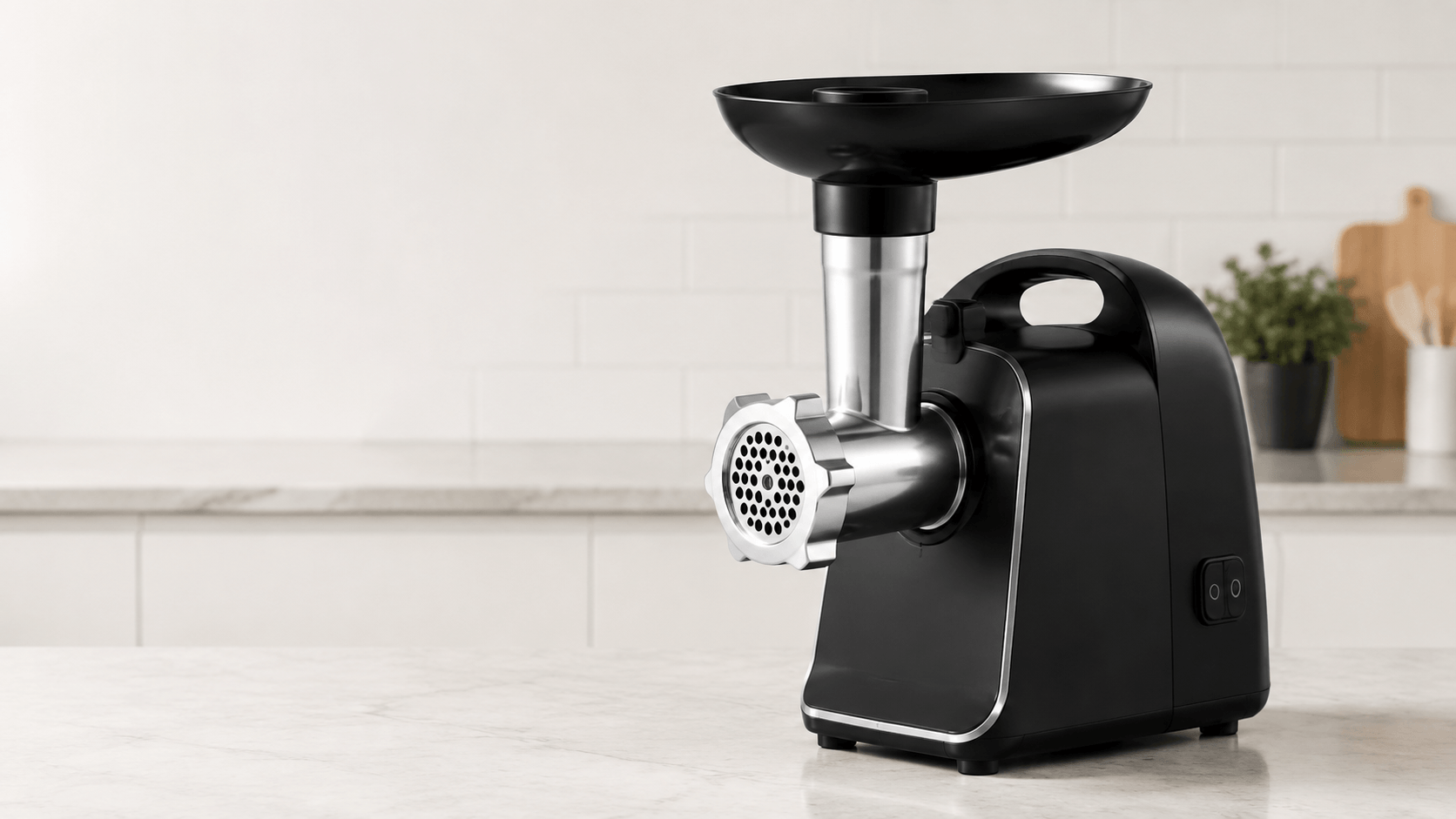
Your sample meat grinder may look fine at first glance, but the auger specification often determines how the unit performs after repeated use, cleaning, and contact with wet or salty meat. Many importers and brand owners review external details first, then find later that the internal screw part was defined too loosely.
For meat grinder auger material OEM projects, approval is not just a matter of “stainless steel or not.” You need to define the steel grade, corrosion expectation, surface finish, dimensional tolerance, and intended end use. This matters even more if you are developing a private-label model from a meat grinder supplier.
Before you request a final quotation or confirm production, your auger spec should match your target market, cleaning expectations, spare parts plan, and cost target. That helps reduce rework, rust complaints, fit issues, and batch inconsistency.
For most OEM meat grinder projects, approve a stainless steel auger specification with a defined material grade, food-contact surface finish, corrosion requirement, and tolerance standard instead of accepting a generic “metal auger” description. The right choice depends on whether the model is for household or heavier-duty use, because higher corrosion resistance and tighter machining control usually increase part cost but can reduce complaint risk.
Why does auger material matter in OEM meat grinder performance?
The auger is a main moving part inside the grinding head. Its material affects feed consistency, wear against mating parts, resistance to moisture and salt, and how the part looks after repeated washing.
If the material is underspecified, you may see discoloration, surface wear, or inconsistent fit with the knife, head, and locking components. In B2B projects, that often becomes an after-sales issue because buyers treat it as a product-quality problem.
You should also think about replacement parts early. If your market expects spare-parts support, a stable auger drawing and repeatable material specification make future replenishment easier.
What should you confirm on grade, wear target, and corrosion resistance?
Many listings simply say “durable stainless steel,” but that is not enough for approval. You need the supplier to identify the exact grade or approved equivalent, and you should confirm whether the part is cast, machined, or made through a combined process.
| Specification point | What to confirm | Why it matters |
|---|---|---|
| Material grade | Exact stainless steel grade or approved equivalent | Prevents vague substitution |
| Wear target | Required wear expectation | Helps balance service life and cost |
| Corrosion resistance | Fresh meat, salted meat, and cleaning frequency | Reduces rust and staining risk |
| Manufacturing method | Casting, machining, or combined process | Affects finish, tolerance stability, and cost |
| Surface finish | Required finish standard on food-contact areas | Important for cleaning and appearance |
| Critical dimensions | Shaft diameter, pitch, end fit, mating tolerance | Avoids assembly issues |
In many OEM discussions, stainless steel is the practical starting point. But the selected grade still needs to match your selling level. A household retail program may accept one cost structure, while a heavier-use model may need a more corrosion-resistant or wear-focused auger specification.
What food-contact and surface finish points should you approve?
Food-contact review is not only about raw material selection. Surface condition also matters because pits, burrs, rough polishing, and inconsistent finishing can affect cleaning and customer perception.
You should request confirmation of the finish requirement on all food-contact zones of the auger, especially along the spiral, shaft area, and contact points near the knife and plate assembly.
- Whether the auger surface is polished or otherwise finished after forming
- Whether edges, burrs, and sharp transitions are controlled during inspection
- Whether the supplier can keep the same finish standard from sample to production
- Whether material declarations or food-contact supporting documents can be reviewed if your market requires them
How should you match auger material to household or commercial use?
You should not approve one auger standard for every project. The right specification depends on duty cycle, target user, cleaning frequency, meat type, and target landed cost.
For a household model, buyers often focus on acceptable corrosion resistance, stable fit, and a clean-looking finish at a competitive cost. For heavier-use models, you may need to place more weight on wear life, tolerance consistency, and resistance to frequent wash cycles.
Three variables should be discussed together during approval:
- Target market: humid or professional-use environments usually need more corrosion attention
- Sample approval standard: define acceptable cosmetic condition and fit quality after use and cleaning checks
- Spare parts plan: decide whether augers will be offered as after-sales parts and whether the same drawing will continue across future orders
If you are reviewing a broader FuFu machine supplier range, make sure the auger spec is tied to the exact model rather than copied across unrelated grinder platforms.
What OEM sourcing questions should you ask about process and tolerance control?
Two augers can look similar in photos but differ in process control. You should confirm how the auger blank is made, which surfaces are machined, which dimensions are critical to assembly, and how variation is controlled between sample and production.
This is especially important in OEM/ODM cooperation, where customized branding may move faster than technical clarification.
- Which dimensions are critical for fit with the grinder head and knife set?
- Is the auger fully machined, partially machined, or mainly cast?
- How is runout or concentricity checked if relevant to the design?
- What inspection points are reviewed before assembly?
- Can the supplier keep the same material and finish standard for repeat orders?
What should be on your final approval checklist before locking the auger spec?
- Confirm exact auger material grade or approved equivalent
- State the required surface finish for food-contact areas
- Define the intended use: household, heavy household, or commercial
- Mark critical dimensions and fit tolerances on the drawing
- Confirm sample approval criteria after assembly and cleaning checks
- Align the auger spec with your target market and cost level
- Decide whether the same auger will be reserved for future spare parts supply
- Keep the approved drawing and revision record with your product file
If you are still narrowing down options in the FuFu machine and meat grinder category, this checklist gives you a stronger RFQ basis and a cleaner approval path.
Which stainless steel auger option is usually safer for OEM approval?
The safer approach is not to approve a generic “stainless steel” description. Ask for the exact grade or an approved equivalent, then match it to use condition, cleaning frequency, and target market. For heavier-duty projects, stronger corrosion or wear performance may justify a higher part cost.
How can I validate whether the auger is suitable for food-contact use?
Start with the material specification, then review finish and process details. Confirm that food-contact surfaces are properly finished, free from obvious burrs, and consistent with your sample approval standard. If your market requires supporting documentation, verify that before mass production.
Should I specify surface finish separately from material grade?
Yes. Material grade alone does not control final cleanliness, appearance, or ease of washing. Your drawing or specification sheet should state the required finish level on food-contact zones and identify any cosmetic limits.
What process-control questions matter most for auger OEM sourcing?
Focus on manufacturing method, critical dimensions, and inspection discipline. Ask whether the auger is cast or machined, which dimensions are checked during production, and how consistency is maintained between the approved sample and later orders.
A clear auger specification reduces sourcing risk more effectively than a vague promise about stainless steel quality. If you want to discuss a meat grinder project, sample review, or private-label requirements, you can send your drawing or target specification through the contact page.
Need FuFu Machine / Meat Grinder Options for Your Market?
Send your target market, quantity, voltage, plug type, logo and packaging requirements. Laiina can help you compare suitable models and prepare a clearer B2B quotation before you confirm your order.