 LAIINA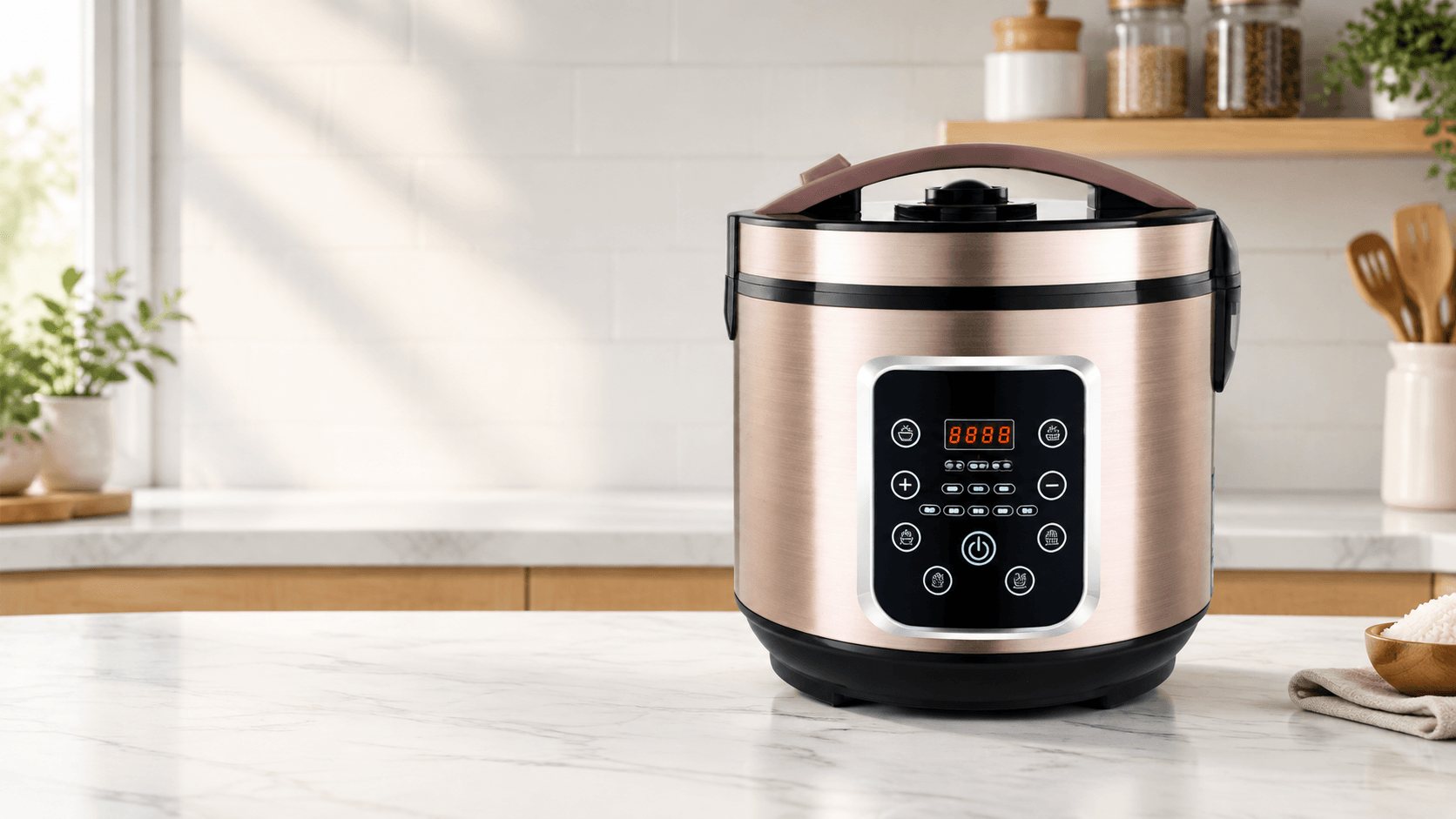
An electric pressure cooker sample may look ready for launch while its safety documents refer to a different component, rating, or model. In a regulated market, approving the physical sample is not enough. The production appliance, technical file, rating label, packaging, and user instructions must all describe the same configuration.
This electric pressure cooker private label checklist takes you from the initial requirement brief through quotation, sample review, and production release. It gives private-label brands, importers, and sourcing managers a practical way to identify the evidence that must be checked before an order proceeds.
Direct answer: Before ordering, approve the target-market requirements, safety-critical component list, construction drawings, applicable test evidence, rating label, user instructions, traceability format, and change-control procedure. Every document should identify the same final model and match the approved production configuration.
1. What Must You Confirm Before Requesting a Quotation?
First, specify where the product will be imported and sold. The destination market determines key details such as electrical ratings, plug configuration, required languages, responsible-party information, and the conformity evidence your team may need to review.
A general question such as whether the appliance “has certification” will not give you enough information. Ask which exact model, rated voltage, frequency, power, plug, control system, and safety components are covered by the available documents. CE, CB, RoHS, LFGB, ETL, or UL may be relevant depending on your market, but you must verify the applicability and scope for the final product you intend to buy.
Your initial request should state:
- Destination country and intended sales channels
- Importer, brand owner, and supplier compliance responsibilities
- Required rated voltage, frequency, power, plug, and cord
- Expected product, packaging, and manual languages
- Documents that must be reviewed before sample or order approval
Reviewing available electric pressure cooker and rice cooker options can help you select a suitable base model before requesting private-label changes.
2. How Should the Checklist Be Built Into Your RFQ?
Your RFQ should connect each safety-critical specification to the evidence used to support it. This reduces the risk of receiving a quotation for one configuration and technical documents for another.
Define the vessel capacity, rated working conditions, heating control, lid-locking arrangement, pressure-control parts, pressure-release path, temperature protection, fuse or cut-off devices, power cord, plug, and control board version. Where a part affects the approved construction, request the component manufacturer and model reference.
A controlled specification table is more reliable than a collection of email descriptions:
| Approval point | Evidence to request | Buyer check |
|---|---|---|
| Electrical rating | Rating data and relevant test-document pages | Matches market, sample, label, and quotation |
| Pressure system | Construction drawing and component list | Pressure controls and release paths are identifiable |
| Lid and interlock | Assembly drawing or operating description | Sample construction matches the documented design |
| Thermal protection | Safety-component schedule and specifications | Part references match the proposed production model |
| Food-contact parts | Material declarations or applicable evidence | Materials correspond to the final bowl and accessories |
| Private-label content | Label, manual, carton, and artwork files | Model identity and warnings remain consistent |
If your project includes custom controls, finishes, accessories, or branding, record these requirements in your OEM/ODM project brief before the supplier confirms which documents cover the proposed product.
3. Does the Technical File Match the Quoted Model?
Once you receive the quotation, check the technical package before treating the offer as ready for production. Relevant pressure cooker safety documentation may include an exploded drawing, bill of materials, electrical diagram, safety-component list, product specifications, risk-related design descriptions, and available test evidence.
Pay close attention to model numbers, suffixes, and variant references. A report or component certificate covering a product family does not automatically cover every private-label version. Ask the supplier to map the quoted model to each submitted document and explain any permitted differences in writing.
Check revision dates as well. If the control board, pressure-control component, lid structure, label, or another relevant part changed after testing, request a written assessment of whether the existing evidence still applies. This gives you a focused basis for pressure cooker supplier qualification without turning the review into a broad factory audit.
4. Are the Sample, Labels, and Instructions Consistent?
Review the sample against controlled documents rather than approving it only for appearance and basic operation. Record its model reference, electrical rating, plug, cord markings, bowl, lid parts, valve arrangement, control panel, accessories, and visible warnings.
Compare these details with the drawings and safety-component schedule. If a critical part cannot be identified without disassembly, agree in advance on how it will be checked during inspection or confirmed through supplier records. Resolve every unexplained mismatch before signing the sample approval.
Treat pressure cooker labeling requirements as part of the product safety review. The rating label, carton, manual, and product interface should show consistent model and electrical information. The instructions should cover installation, intended use, pressure release, cleaning, foreseeable misuse, warnings, and required destination-market languages without conflicting with the appliance design.
For additional model context, compare the proposed configuration with Laiina’s pressure cooker product category. List each requested private-label difference so that it can be checked against the sample and supporting documents.
5. What Must Be Locked Before Production Release?
Your production approval should clearly state what the supplier cannot change without your written authorization. A safety-related substitution can affect private label appliance compliance even if the finished product looks identical.
Create a release record that identifies the approved specification revision, sample, label artwork, manual version, component schedule, and document list. Require advance written notice of changes involving the heating system, pressure controls, lid mechanism, thermal protection, power cord, plug, control board, food-contact materials, model designation, or warnings.
Before shipment, request confirmation that production follows the approved release. Check the final model references, artwork revisions, required records, and any authorized deviations. This gives your inspection or document-review team a defined standard and reduces the risk of discovering an unapproved substitution after the goods enter your market.
Frequently Asked Questions
Which documents must identify the final private-label model?
The rating label, product specification, approved artwork, user manual, quotation, and production release record should use a consistent model identity. Test reports or component documents may refer to a base model, but the supplier should give you a clear written explanation linking that reference to your final configuration and identifying any covered differences.
Is an approved pressure cooker sample enough to place an order?
No. The sample confirms the unit you inspected, but it does not independently confirm document coverage or production consistency. Approve it together with the specification, drawings, safety-component list, relevant test evidence, label files, instructions, and change-control terms. These records provide a measurable reference for production and pre-shipment verification.
How should safety-component changes be controlled after approval?
Identify which components require prior written approval. If the supplier proposes a replacement, request the reason for the change, the replacement part reference, specifications, and supporting evidence. Your technical or compliance reviewer should then decide whether the change affects existing approvals or needs further evaluation. Update the controlled component schedule only after acceptance.
What should happen if the label and technical documents show different ratings?
Pause the approval process until the discrepancy is resolved. Ask the supplier to confirm which rating represents the actual production construction and issue corrected, revision-controlled files. At production release, the sample, rating label, manual, carton data, specification, and supporting evidence should not conflict on voltage, frequency, power, capacity, or model information.
A controlled approval process lets you base your private-label decision on matched specifications and evidence rather than sample appearance alone. To discuss a pressure cooker configuration and the documents required for your project, contact Laiina with your target market and approval requirements.
Need Rice Cooker / Pressure Cooker Options for Your Market?
Send your target market, quantity, voltage, plug type, logo and packaging requirements. Laiina can help you compare suitable models and prepare a clearer B2B quotation before you confirm your order.