 LAIINA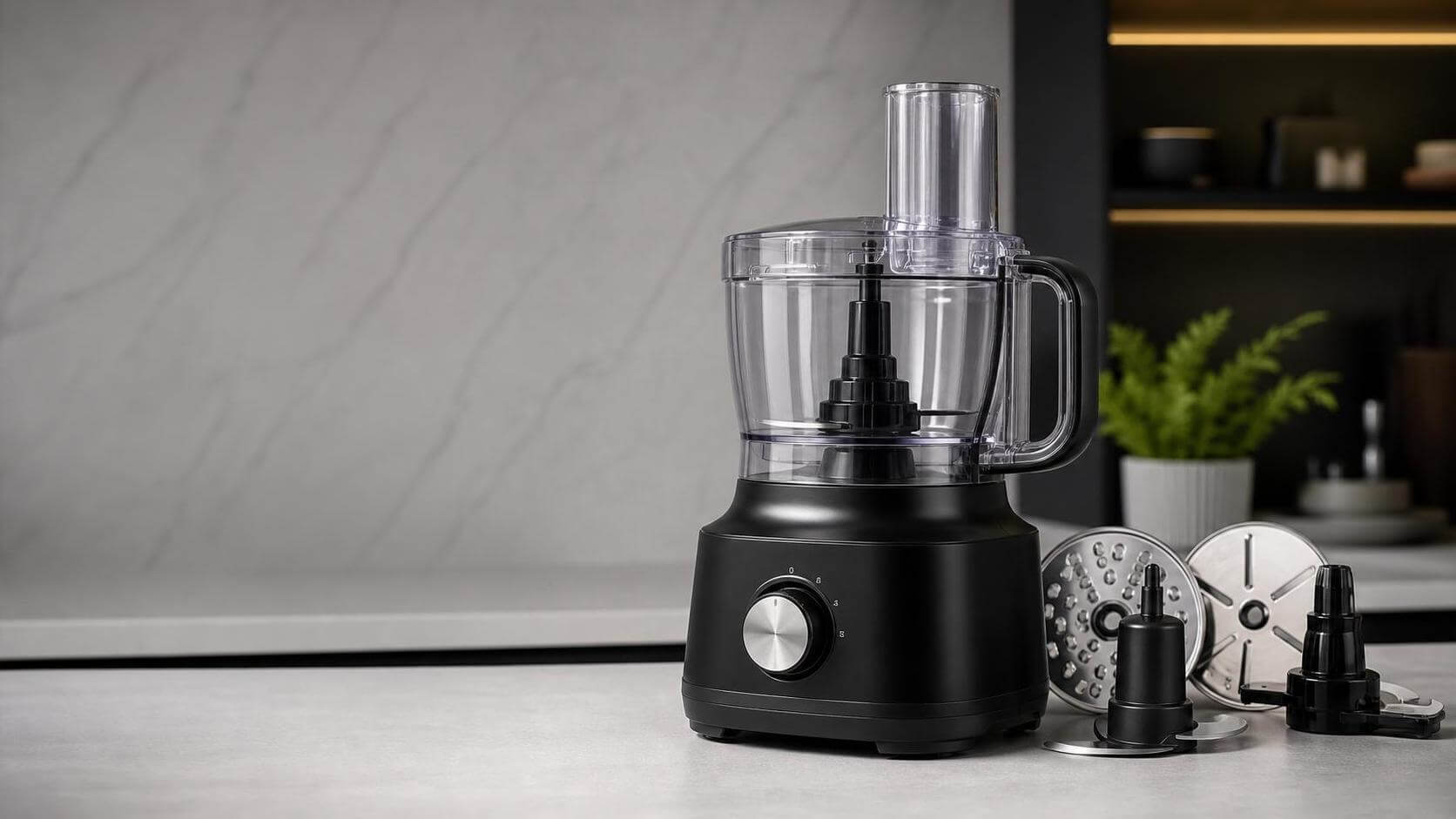
Your margin can shrink well before the shipment reaches your warehouse. A food processor quote may look workable at first glance, but your actual buying decision usually comes down to voltage version, plug type, packaging details, sample terms, and the shipping basis behind the unit price.
If you import for distribution, wholesale, or retail programs, the lowest headline number is rarely the full story. What you need is a food processor wholesale supplier that provides a quote you can actually use—one that shows total cost, highlights risk points early, and still makes sense after freight, customs, local labeling, and after-sales support are added.
Before requesting prices, define your target market, sales channel, and product position. A supermarket listing, an online private label launch, and a distributor catalog order can each require different carton strength, manual language, accessory combinations, and barcode labeling.
A reliable food processor wholesale supplier quote should help you calculate landed cost, not just show an ex-works price. Before placing a bulk order, you need to confirm the full specification, MOQ, sample policy, packaging details, branding charges, shipping terms, and after-sales support.
If two suppliers offer similar unit pricing, the better option is often the one with fewer hidden costs, clearer approval steps, and a quotation format that matches your market requirements.
What Should You Check in a Food Processor Wholesale Quote?
A useful quote should describe the exact product version, not just a model photo with one price line. Check motor power, bowl capacity, housing material, included accessories, voltage, frequency, plug type, and packing method so you are not comparing different products as if they were equivalent.
Ask the supplier to separate pricing by trade term such as EXW, FOB, or CIF where applicable. This makes quote comparison easier and reduces confusion when one food processor wholesale supplier includes local charges and another does not.
It is also worth requesting carton dimensions, gross weight, units per carton, and manual language options at the quotation stage. These details affect freight planning, local compliance work, and how the product will be presented in your market.
For product screening, you can review available food processor wholesale options and narrow down the product type before requesting a final commercial quote.
How Should You Review MOQ, Tiered Pricing, and Sample Cost?
MOQ is not only a purchasing threshold. It also affects your unit cost, packaging flexibility, and whether the supplier can support a market-specific version without combining your order with another buyer’s specification.
Ask for at least three quantity levels, such as a trial order volume, standard MOQ, and one higher-volume break. This helps you see whether the quoted price is realistic for your sales plan or only attractive at a level you do not intend to buy.
Sample cost should be shown separately from mass-order pricing. Confirm whether the sample uses final packaging, whether courier cost is included, and whether the sample fee can later be deducted from a bulk order.
| Quote Item | What You Should Confirm | Why It Matters |
|---|---|---|
| Unit price basis | EXW, FOB, or CIF | Affects true quote comparison |
| MOQ level | Per model, per color, or per voltage | Changes order flexibility |
| Sample charge | Product only or with shipping | Prevents hidden pre-order cost |
| Voltage and plug | 110V/220V and market plug type | Avoids market mismatch |
| Carton detail | Size, weight, carton strength | Impacts freight and damage risk |
| Manual and labels | Language, barcode, warning label | Supports local market readiness |
Which OEM, Packaging, and Branding Charges Need Confirmation?
Private label projects often appear simple until branding costs start appearing item by item. Before moving forward with an OEM or ODM program, confirm what the standard quote includes and what will be billed separately.
You should check the logo application method, gift box redesign, carton printing, color box quantity requirement, instruction manual layout, barcode stickers, and any tooling or plate cost tied to custom packaging. In some cases, a low unit price becomes less competitive once these setup charges are added.
Also confirm the approval process for artwork and pre-production samples. This helps you avoid delays caused by packaging revisions, incorrect language versions, or market-specific warning text that was not reviewed early enough.
How Do Lead Time, Capacity, and Shipping Terms Affect Your Order?
Lead time should be tied to an approved specification, not discussed as a rough estimate. Ask whether timing starts from deposit receipt, artwork confirmation, sample approval, or packaging approval, because each trigger changes your launch plan.
Shipping terms matter just as much as production timing. A quote from a food processor wholesale supplier is easier to evaluate when the port, container loading assumptions, and shipment method are stated clearly.
Ask practical questions about split shipments, spare parts support, and replacement policy for transit or arrival issues. If you handle distribution and after-sales service, these points can affect the real cost of the order as much as the factory unit price.
If your business is building a broader sourcing list, reviewing a supplier’s food processor product range can also help you see whether accessories, variations, and adjacent models fit your channel plan.
How Can You Compare Landed Cost Across Suppliers?
The clearest method is to convert every offer into an estimated landed cost per sellable unit. Start with the quoted unit price, then add sample expense, branding charges, export packaging upgrades, freight, insurance, customs duty, local handling, and expected after-sales cost.
You should also include variables that are easy to overlook: stronger outer cartons for e-commerce, multilingual manuals for multiple markets, spare parts packs for service agents, and plug or voltage variants for regional compliance. These details may not change the product photo, but they do change your true landed cost.
If one supplier offers a lower price but weaker quote detail, that is not automatically the better buy. For many distributor orders, quote clarity has direct value because it reduces claim risk, relabeling cost, and launch delays.
What Should Distributors Include in an RFQ Before Ordering?
Before sending your inquiry, prepare a complete RFQ so the replies are easier to compare. A weak RFQ usually leads to mixed quotations, slower internal approval, and hidden cost differences.
- State your target market and sales channel.
- Specify voltage, frequency, and plug type required.
- List preferred capacity, accessories, and color options.
- Confirm whether you need neutral packing or private label packaging.
- Request manual language, barcode, and carton marking details.
- Ask for MOQ by model, by color, and by packaging version.
- Request sample terms and sample approval procedure.
- Ask what after-sales parts or replacement support is available.
- Request quote validity and trade term clearly.
What affects food processor wholesale supplier pricing the most?
The main drivers are product specification, motor power, accessory set, housing material, voltage version, plug type, packaging level, and order quantity. Private label work can add logo, color box, barcode, and manual costs. Freight basis also matters because an EXW quote and a FOB quote are not directly comparable without adding the missing logistics cost.
What MOQ is typical when buying from a food processor wholesale supplier?
MOQ varies by model, packaging requirement, and whether you need a standard version or a custom branded order. You should ask whether MOQ applies per item, per color, per voltage, or per box design. That detail matters because a low stated MOQ may still become restrictive if your market needs separate plug types or multilingual packaging.
Should distributors focus on unit price or landed cost?
Landed cost is the more useful number because it reflects what the order actually costs once packaging upgrades, branding charges, freight, customs, and local handling are included. A lower unit price can become less competitive after sample fees, relabeling, stronger export cartons, or after-sales spare parts are added. This is why quote structure matters as much as the headline price.
What should I ask before approving a food processor sample?
Confirm that the sample matches the final specification, including voltage, plug type, accessories, packaging level, manual language, and branding method if applicable. You should also check whether the sample is hand-built or production-standard. Sample approval is more useful when it reflects the real mass-order version rather than a temporary display unit.
A food processor wholesale supplier should help you make a clean commercial decision, not leave you estimating missing costs on your own. If you want to discuss product options, quotation details, or OEM/ODM requirements, you can contact Laiina here for your inquiry.
Need Food Processor Options for Your Market?
Send your target market, quantity, voltage, plug type, logo and packaging requirements. Laiina can help you compare suitable models and prepare a clearer B2B quotation before you confirm your order.