 LAIINA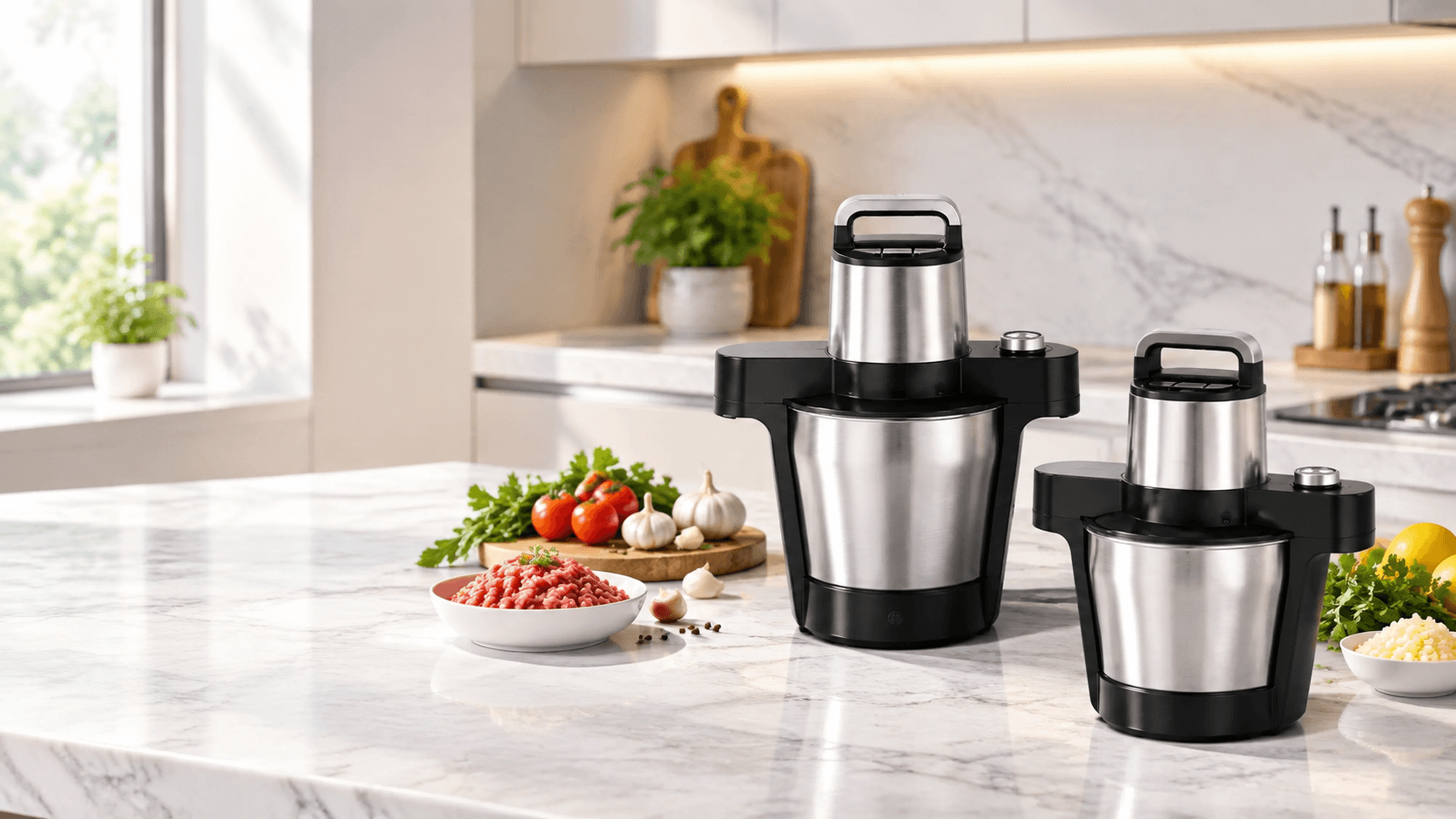
A wholesale shipment becomes difficult to sell when the machines look suitable on paper but stall under thick pounding loads, overheat after repeated batches, or arrive with the wrong plug and voltage for your market. Returns, retailer complaints, and discounting can quickly cost more than the original purchase-price saving.
When comparing a fufu machine manufacturer for wholesalers, do not approve a model from wattage and bowl litres alone. Connect the expected workload to a defined motor test, a realistic batch size, and one approved electrical configuration for each destination market.
This guide focuses on the checks that prevent those failures. It gives kitchen-appliance wholesalers a practical specification brief for comparing supplier offers before stock is ordered.
Direct answer: Require a declared motor rating and a repeatable loaded-duty test, not a wattage claim alone. Match usable bowl capacity to the batch sizes your resellers expect, then confirm voltage, frequency, plug type, rated current, and required market documentation as one approved electrical variant before production.
What Should Your Fufu Machine Manufacturer Specify?
Start by defining the failure you will not accept. A machine intended for occasional household use may not suit retail channels where buyers expect several dense batches in one session. Ask your distributors and retailers about likely batch frequency, the firmness of the product processed, and whether the machine will run repeatedly during busy periods.
Then separate the needs of each stock line. A compact model may suit entry-level demand, while a larger bowl model may be expected by family-focused or high-turnover outlets. Do not treat a larger bowl as an automatic upgrade: it can place more load on the drive system if the motor and transmission were not designed for it.
Before requesting quotations, review the available FuFu machine and meat grinder range and state the intended market, use pattern, and preferred capacity class. Giving each supplier the same operating context makes their offers easier to compare.
How Can You Turn Pounding Demand Into a Motor Test?
Fufu machine motor power is a useful comparison field, but it is not a complete performance measure. Rated input watts do not show motor torque under load, the transmission arrangement, or how the machine behaves as the mixture becomes dense. Two models with similar stated wattage can therefore perform differently in actual use.
Request the motor type, declared rated power, overload-protection arrangement if fitted, and stated operating/rest cycle. Most importantly, ask the manufacturer to define a loaded demonstration: the material used, batch mass, run duration, number of cycles, rest intervals, and pass/fail criteria. If a sample is available, use the same protocol during your evaluation.
| Risk point | Specification to require | Decision purpose |
|---|---|---|
| Slowdown or stalling | Motor rating, transmission description, and loaded test method | Checks whether output is meaningful under dense loads |
| Heat during repeat use | Declared duty cycle and rest interval | Aligns the model with expected batch frequency |
| Overfilled bowl | Total and recommended usable capacity | Prevents capacity claims from overstating practical batches |
| Market mismatch | Voltage, frequency, plug, rated current, and label artwork | Stops an incorrect electrical variant entering stock |
Do not set a universal minimum wattage without the test conditions. Compare offers using the same loaded-batch protocol instead. This keeps a lower-priced quotation from appearing equivalent simply because its headline motor number is similar.
What Bowl Capacity Fits Your Wholesale Stocking Mix?
Ask for both the physical bowl volume and the recommended working capacity. Usable capacity matters because safe, consistent operation may require headspace and a limit on batch mass. The supplier should also identify the bowl material, paddle or pounding-tool material, lid arrangement, and the parts that contact food.
For your fufu machine wholesale assortment, use capacity as a merchandising decision rather than a stand-alone technical claim. A smaller bowl may help retailers offer a compact option, while a larger bowl may suit shoppers looking for larger batches. In each case, confirm that the requested batch size was included in the motor-duty evaluation.
Ask for dimensional drawings or photographs showing the bowl, lid, locking points, and tool assembly. These details help your team assess shelf-space requirements and determine whether users can reasonably remove and clean the parts that need routine attention.
Which Electrical Variant Should You Approve?
Electrical mismatch is one of the easiest stock problems to prevent. Your specification should name the destination country or countries and state the exact voltage, frequency, plug standard, rated current, cord requirements, and label language needed for each variant. Do not treat wording such as “export voltage available” as an approval point.
Where several markets use different electrical systems, assign a separate model code or clear variant code to each configuration. Confirm which fields will appear on the rating label, carton marks, instruction material, and commercial invoice. If your market requires particular electrical or food-contact compliance documents, list the documents you need to review; do not assume they apply to every model or destination.
You can compare relevant fufu machine models for bulk sourcing by requesting these electrical fields in one consistent format. This is more reliable than comparing product photos or plug images.
What Build Details Should Release the Order?
Your specification sheet should identify the build elements most likely to affect repeated pounding use: motor mounting, drive connection, bowl attachment, switches or controls, base stability, cord entry, and any interlocks or overload protection stated for the model. Ask what is replaceable and request part names or codes for wear-prone components. This gives you a clear record of the construction you approved.
Use a single approval sheet that includes product photos, model code, electrical variant, declared ratings, recommended working capacity, duty-cycle statement, component list, and the agreed loaded-test record. Changes to any of these fields should require written reapproval. If you need a branded exterior or revised instructions, define those changes separately so they do not obscure the core operating specification.
A clear approval sheet gives you a factual basis for comparing a fufu machine factory, approving samples, and checking that the final order matches the model your sales team intends to stock.
FAQ: Fufu Machine Specification Decisions
Is a higher wattage figure always better for a fufu machine?
No. Wattage is only one declared electrical rating. It does not by itself show torque under load, drive efficiency, thermal behavior, or suitable operating time. Compare motor figures only after requesting the same loaded-batch test conditions and duty-cycle statement from each supplier. Select the model for the workload your channel expects, rather than for the largest number on a product listing.
How should bowl capacity affect the motor requirement?
A larger bowl can allow a larger batch, but it can also increase resistance during pounding when filled near its working limit. Require the supplier to state the recommended usable capacity, not only total bowl volume, and confirm that the motor test uses that intended batch size. This links the bowl claim to actual operating demand and helps prevent an oversized but underpowered combination from entering stock.
What electrical information should be fixed before wholesale production?
Fix the voltage, frequency, plug type, rated current, power-cord specification, rating-label details, and destination-market language requirements. If you sell into more than one electrical system, use separate variant codes and obtain confirmation for each. Also list any market-specific documents your importer or compliance team requires, because requirements can differ by country and product configuration.
What is the most useful sample check before approving an order?
Run a documented comparison using the same defined material, batch mass, operating duration, and rest interval that represent your expected channel use. Record speed behavior, heat, stability, bowl retention, control response, and visible condition after the agreed cycles. The purpose is not to claim a universal test standard; it is to verify that the exact sample performs against the written workload you plan to sell.
Before committing wholesale stock, send your market and workload brief with the specification sheet request. For help identifying a suitable model and discussing your required configuration, contact Laiina’s team.
Need FuFu Machine / Meat Grinder Options for Your Market?
Send your target market, quantity, voltage, plug type, logo and packaging requirements. Laiina can help you compare suitable models and prepare a clearer B2B quotation before you confirm your order.