 LAIINA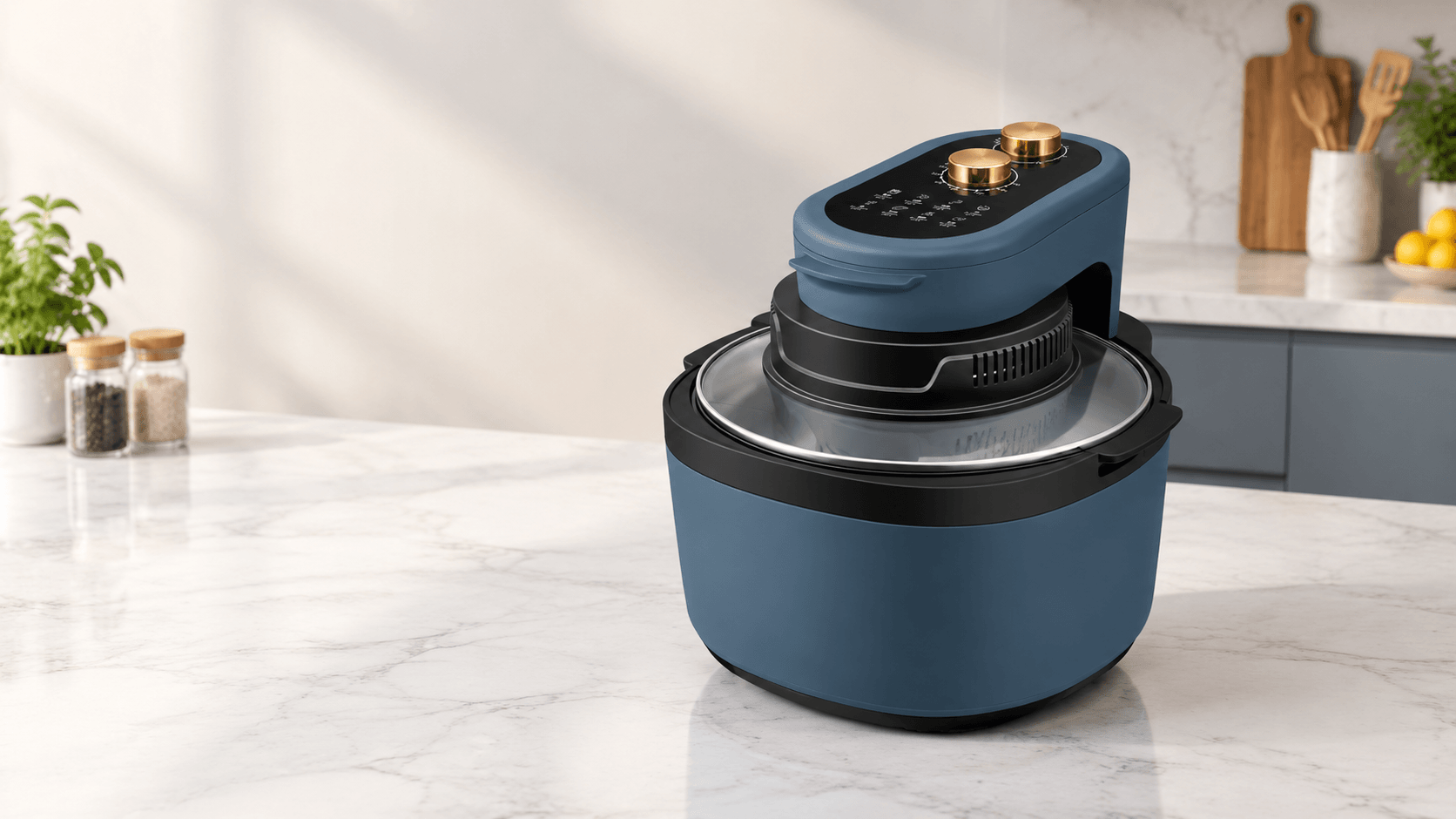
Your first air fryer sample may look right on screen and still fail as a complete product. The housing, handle, control panel, and logo may not work together: matte black can appear glossy, warm white can shift toward gray, or a logo can lose contrast against the selected finish. These issues can delay approval and leave you deciding whether to accept an unsuitable private label product or restart the process.
Treat OEM air fryer color customization as a documented approval workflow, not a general request for a “custom color.” Before requesting a quotation, define the finish, reference standard, component colors, logo treatment, and approval authority. Then link the approved pre-production sample to the quotation and production instructions.
Before placing an OEM air fryer order, confirm the exact color reference, surface finish, parts included in the color change, logo method, and sample approval rules. Require a physical or clearly documented pre-production sample, record any permitted color tolerance, and state that mass production must follow the approved reference.
What Finish Fits Your Brand Positioning?
Begin with the market position of your private label air fryer. A premium range may call for a restrained matte or soft-touch appearance, while a value-focused line may need a practical finish that can be reproduced consistently. Do not choose a color from a digital image alone; screens display color differently.
Describe the finish separately from the color. Your brief might specify a solid color with a matte, satin, or gloss surface, along with the areas it covers: the main housing, basket handle, control area, and trim. Identify any surfaces that must remain black, metallic, transparent, or unchanged.
Review comparable models in the air fryer product range to see which exterior areas need to be defined in your brief. Use this as a scope reference, not as a substitute for confirming the exact OEM model and available finish with the supplier.
How Should You Turn the Color Idea Into a Production Brief?
Once you choose the direction, convert it into information that the quotation and production teams can interpret consistently. Include an internal color name, a physical color reference or recognized standard where applicable, the finish, target parts, logo artwork, and exclusions.
For air fryer color matching, ask whether the reference is a visual guide or the required production target. Also ask which material and surface will be matched. The same color can look different on textured plastic, smooth plastic, coated metal, and printed graphics.
| Brief item | Buyer decision | Written confirmation to request |
|---|---|---|
| Color reference | Physical swatch, standard reference, or approved sample | Reference identity and matching method |
| Finish | Matte, satin, gloss, texture, or other specified appearance | Finish description and applicable parts |
| Color scope | Housing, handle, panel, trim, basket, or selected components | Part-by-part color map |
| Logo treatment | Printed, transferred, engraved, or another proposed method | Artwork version, position, size, and color |
| Approval rule | Who approves and what controls production | Signed or written sample approval record |
Ask the quotation to distinguish standard colors from custom color work. If a change affects tooling, coating, printing, or component sourcing, identify it before comparing prices. For broader private label planning, review the OEM/ODM cooperation process and use the same terminology in your inquiry.
Which Color-Matching Method Should You Use?
No single color-matching method suits every air fryer surface. A supplier may compare the product with a physical swatch, recognized color reference, approved retained sample, or digital file. Each method needs a defined viewing condition and acceptance rule.
Ask which method will be used for the housing and which will be used for the logo or control graphics. Request a sample made with the intended material, texture, and finish whenever possible. A painted or coated sample may not represent a molded plastic part, while a printed logo may not look like an engraved mark.
When reviewing the custom color air fryer sample, use consistent lighting and compare the main visible surfaces together. Record whether the sample is accepted as shown, accepted with listed changes, or rejected for revision. Avoid approving a single close-up image when the color balance of the complete product matters.
How Do You Keep the Brand System Consistent Across Visible Parts?
Color approval can fail even when the main housing is close to the target. The handle, display surround, control buttons, basket, feet, trim, and logo may create unintended contrast or appear to be different shades. Mark every visible part on a simple product image or drawing and assign a color, finish, or “no change” instruction.
For air fryer logo customization, provide vector artwork, the intended logo color, placement, dimensions, and a clear contrast requirement. Confirm whether the logo is applied before or after the exterior finish and whether the proposed method suits the selected surface. Keep packaging artwork separate from product color approval so a printed box does not become the only color reference.
Before requesting a final quotation, send the complete brief with the model, color map, artwork revision, sample requirement, and intended sales market. You can also compare relevant OEM air fryer models after the color scope is clear, since model changes can alter the visible surface area and branding layout.
How Should You Approve the Pre-Production Sample?
Use a staged approval sequence. First approve the color direction and finish. Next review the complete air fryer pre-production sample with all visible components and the proposed logo. Finally, issue one written approval record identifying the sample date, model, artwork version, color references, accepted deviations, and parts that must remain unchanged.
Do not treat a quotation image, prototype photograph, or verbal message as the final production standard unless your purchasing process records it that way. Ask how color variation will be checked during production and how a mismatch will be reported. If the supplier cannot confirm the approval checkpoint, the quotation is incomplete for a branded order.
Keep the approved sample or an agreed reference set accessible to the buyer, supplier, and inspection party. This reduces disputes caused by different screens, informal color names, or later artwork changes.
FAQ: Air Fryer Color Approval
Can a digital image be used as the final color reference?
A digital image is useful for discussing direction, but it should not normally be the only final reference. Screen settings, lighting, photography, and compression can change the appearance. Ask whether a physical swatch, recognized reference, or approved retained sample will control production. If a digital file must be used, document the viewing conditions, finish, material, and approval limitations.
Should the handle and control panel be included in color matching?
Yes, if they are visible parts of the branded product. Confirm each component separately because different materials, textures, and application methods can create different visual results. Your color map should state which parts match the main housing, which use a contrasting color, and which remain standard. Review the complete assembled sample rather than approving housing pieces in isolation.
What should a buyer approve before mass production?
Approve the exact model, finish, color references, component color map, logo artwork and placement, sample images or physical sample, and any permitted variation. The approval should identify the responsible buyer and date. It should also state that later changes require written confirmation. This record gives both sides a clear reference when quotation details, artwork, or production personnel change.
What if the first sample is close but not suitable for launch?
List the specific correction instead of asking for a generally “better” match. Note whether the issue is hue, brightness, gloss, texture, logo contrast, or a component mismatch, and identify the affected part. Ask whether the revision changes the quotation or production schedule. Approve a revised complete sample before ordering, especially when several exterior colors or branding methods are changing together.
Effective color customization depends on a precise brief, a complete assembled sample, and a written approval checkpoint. When you are ready to discuss an OEM air fryer color project, send Laiina your model, color references, finish requirements, and artwork brief for quotation review.
Need Air Fryer Options for Your Market?
Send your target market, quantity, voltage, plug type, logo and packaging requirements. Laiina can help you compare suitable models and prepare a clearer B2B quotation before you confirm your order.