 LAIINA
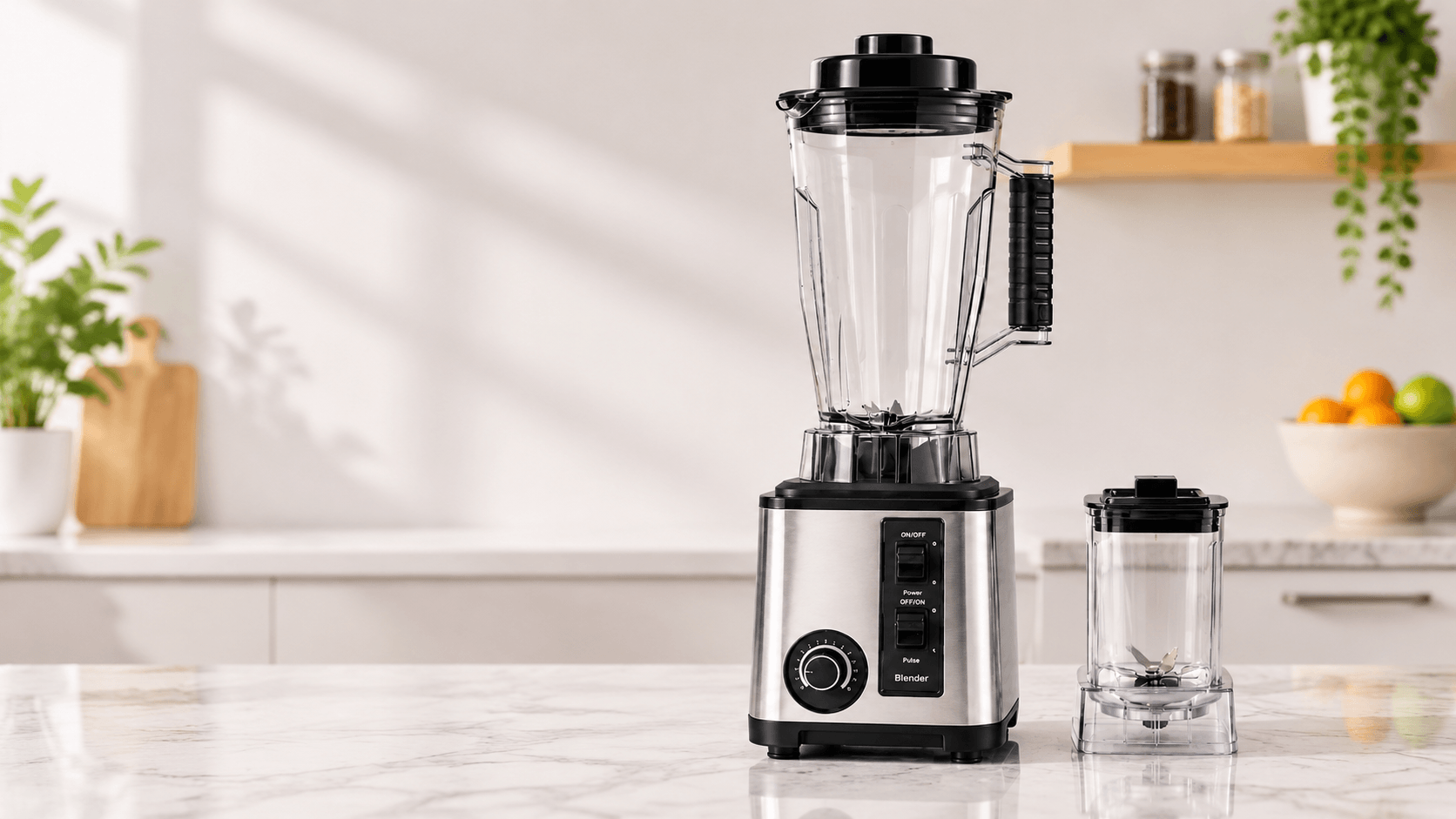
A portable juice blender sample can look right and still miss your intended product position. A compact cup may suit travel but fail to deliver the serving size or blending result customers expect. Battery choices can also affect charging instructions, packaging and destination-market requirements.
Use this portable blender OEM specification checklist before requesting quotations. Separate fixed requirements from optional branding choices so each factory quotes against the same brief and samples can be assessed against defined approval criteria.
Before approving a portable juice blender sample, confirm its intended recipes, usable capacity, motor and blade performance, battery and charging configuration, food-contact materials, sealing, cleaning method, safety controls, packaging and brand customization. Put each decision in writing and require the sample and quotation to reference the same specification version.
Start with the use case and market requirements, then finalize appearance and packaging. This prevents an attractive but unsuitable sample from becoming the basis for a bulk order.
1. What Must the Blender Handle?
Start with the customer use case rather than a model number. Select one primary position:
- Light daily drinks: prioritize portability, simple operation and a practical serving size.
- Thicker mixtures: ask the factory to demonstrate the intended ingredients and document the blending cycle.
- Travel or outdoor use: prioritize secure sealing, protected controls, charging convenience and resistance to movement in a bag.
- Multi-purpose private label: confirm whether the design supports the wider recipe range without changes to the motor, blade assembly or safety instructions.
Define ingredients, texture, serving size and operating frequency. Do not accept “powerful blending” as a specification. Request a repeatable test method for sample approval. Compare relevant models in Laiina’s kitchen blender product category while preparing the brief.
2. Which Performance Details Need to Be Fixed?
Lock the technical details that affect product identity and quotation. Confirm the factory’s motor rating method, blade material and configuration, controls, intended cycle, noise expectations and usable cup capacity. If several capacity figures are shown, ask whether each is total or recommended filling volume.
Capacity is a trade-off. A larger cup may support a bigger serving but increase weight, portability limits and packaging dimensions. A smaller cup may suit travel but fail to meet recipe or portion expectations. Record target capacity, external dimensions and maximum recommended fill level separately.
For a USB rechargeable blender, confirm whether the charging interface, cable and operating indicator are fixed or customizable. Ask the factory to state the conditions used to measure sample performance so quotations can be compared consistently.
3. What Power and Safety Requirements Apply?
Confirm battery chemistry, nominal capacity, charging input, charging time, low-battery behavior, protection features and whether the battery is integrated or replaceable. Record capacity with its unit and test basis; a larger stated figure alone does not confirm longer operation.
Ask how the design prevents operation when the cup or lid is incorrectly positioned. Confirm protection against foreseeable misuse, such as an unsecured blade assembly or charging during operation, and request applicable safety documentation for the destination market. CE, CB, RoHS, LFGB, ETL or UL may be relevant checklist items, but verify the exact requirement, product scope and supporting evidence.
Determine whether the market requires a specific plug, cable, label language or warning statement. Include these details in the brief because they can affect the sample, artwork and packaging.
4. Which Materials and Cleaning Experience Do You Need?
Define what “easy to use” means. Confirm cup material, lid construction, gasket or sealing method, blade-to-cup connection, grip, controls and cleaning process. For food-contact parts, identify every material and request the documentation required for the market. A general “food grade” statement is not enough.
Select the cleaning route:
- Rinse-focused design: specify which parts may be rinsed and which must remain dry.
- Removable components: confirm tool-free removal, reassembly and replacement-part identification.
- Non-removable blade unit: require a clear cleaning method and inspection for residue around seals and joints.
Check leakage after filling, carrying and cleaning simulations relevant to the product position. Record odors, loose parts and difficult-to-clean areas as sample approval criteria.
5. How Should You Control Branding and Packaging?
Choose customization after the functional route is approved. Decide on logo placement, colorways, surface finish, button treatment, labels, instruction language and custom carton. Separate changes affecting tooling or components from printing-only changes.
For portable blender packaging customization, confirm unit-box dimensions, protective inserts, included cable, manual, warning labels, barcode area and master-carton arrangement. Request artwork templates and packaging samples before final approval. Packaging should protect the cup, lid, blade area and charging accessories while keeping required product information visible.
| Decision checkpoint | Must be written in the brief | Sample approval question |
|---|---|---|
| Use case | Ingredients, texture, serving size and cycle | Does the sample repeat the agreed test? |
| Core design | Usable capacity, dimensions, motor and blade details | Does the physical sample match the quotation? |
| Rechargeable system | Battery capacity, charging input and protection behavior | Are labels, cable and charging actions correct? |
| Food-contact route | Materials, seals and cleaning method | Is it secure, cleanable and free from leakage? |
| Brand package | Logo, colors, artwork, accessories and carton | Are approved details shown on the sample? |
Use a version number on the brief, sample photos and quotation. Ask each supplier to mark every item as standard, modified, unavailable or requiring confirmation. For OEM or ODM cooperation, review Laiina’s OEM/ODM information and use the same brief for each inquiry.
6. Is the Sample Ready for Approval?
Approve the sample only when the observed result matches the agreed specification. Check dimensions, usable capacity, blending test, controls, charging behavior, seals, cleaning, labels, accessories and packaging. Photograph deviations and classify each as a correction, accepted variation or rejection reason.
Keep performance requirements separate from visual preferences. If a color, logo position or carton change remains undecided, label it open. The final quotation should identify the approved sample reference, specification version and items that must be closed before production.
Send the completed brief, destination markets, intended use case, artwork status and acceptance criteria together. To discuss a portable juice blender project with Laiina, submit your inquiry here.
Portable Blender OEM Checklist FAQs
Should capacity or portability come first?
Start with serving size and carrying context. If the product must fit a small bag, define maximum dimensions and weight first, then select the largest usable capacity within that boundary. If serving size is primary, accept that the cup and packaging may be larger. Record total and usable capacity separately.
What should buyers confirm about portable blender battery capacity?
Confirm battery chemistry, nominal capacity, charging input, interface, charging time and low-battery behavior. Ask how operating performance was measured and whether capacity is nominal or tested under load. Verify protection features, labeling, cable configuration and destination-market documentation.
Which food-contact material details belong in an OEM brief?
List every ingredient-contact part, including the cup, lid, gasket and blade-area components. Ask the factory to identify each material and provide required market documentation. Also specify odor, staining, sealing and cleaning expectations. A broad “food-safe” description is not enough for sample comparison.
When is a portable blender sample ready for approval?
Approve it after it matches the written use case, dimensions, usable capacity, performance test, charging behavior, safety controls, materials, sealing, cleaning method and approved brand details. Record deviations with photos and a disposition. Reference the approved sample and specification version in the quotation.
Before requesting a quotation, review Laiina’s Kitchen Blender product directory to compare model options and packaging direction.
Need Kitchen Blender Options for Your Market?
Send your target market, quantity, voltage, plug type, logo and packaging requirements. Laiina can help you compare suitable models and prepare a clearer B2B quotation before you confirm your order.