 LAIINA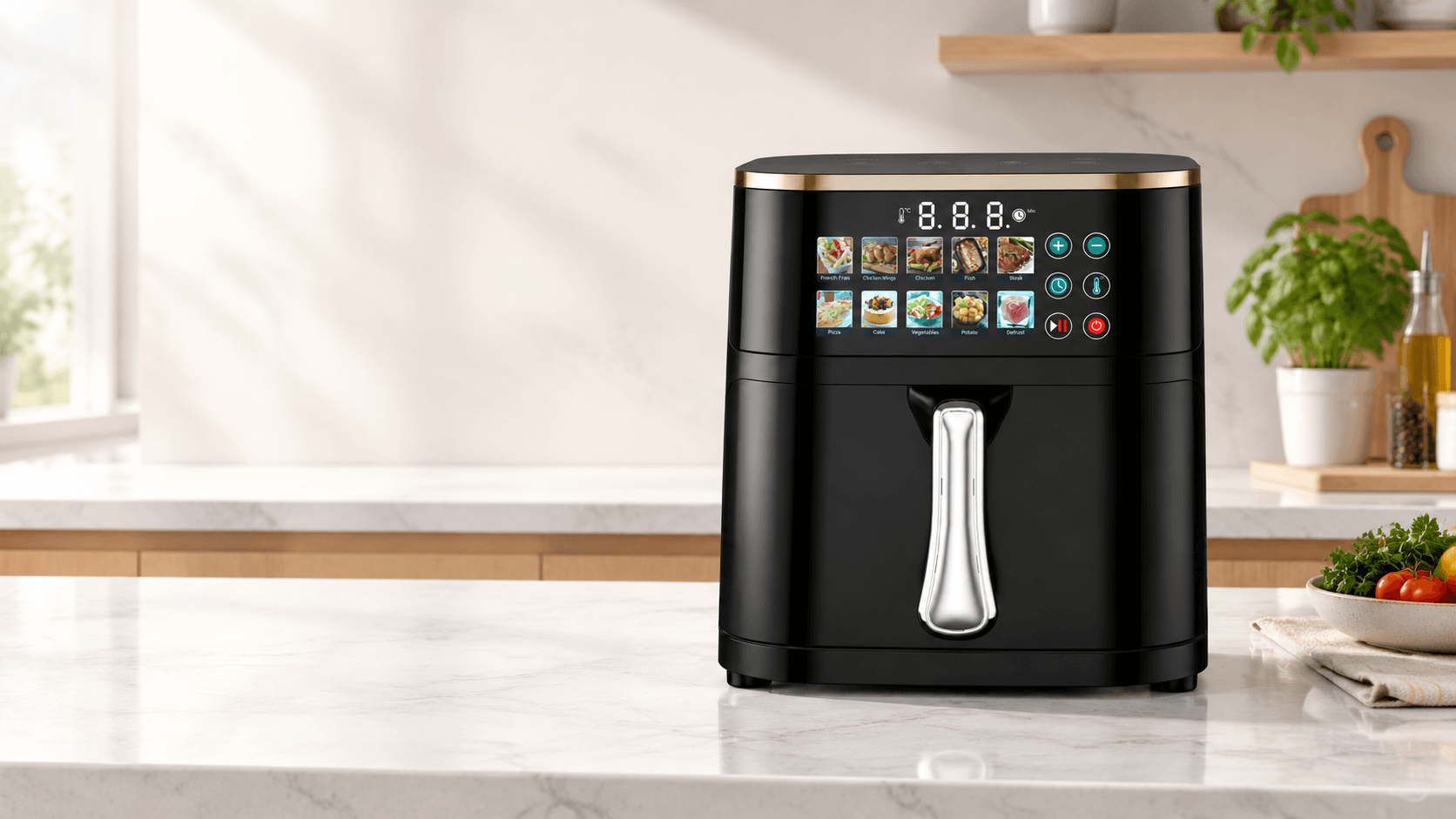
You select an air fryer model, receive an attractive quotation, and then find that the plug, rating label, manual, or existing test evidence does not match your destination market. That can lead to revised specifications, additional testing, delayed artwork approval, or a product that cannot be released on schedule.
This private label air fryer certification checklist follows the sourcing process from market definition through quotation and final approval. It helps you prepare a clearer brief for an OEM/ODM air fryer project and request evidence for the exact model, configuration, and selling region.
Before requesting a quotation, define the destination country, electrical configuration, applicable product-safety requirements, environmental obligations, language needs, and label content. Ask the OEM for model-specific declarations, test reports, critical-component information, manuals, artwork data, and traceability documents. Then confirm with your importer, compliance specialist, or testing laboratory which evidence is legally sufficient for your market.
1. What Should Be in Your Compliance Brief Before You Ask for Price?
Start with a one-page compliance brief rather than a product photograph. State whether you will sell in the United States, the European Union, or both, and list the countries or channels involved. Requirements may differ by country, state, retailer, or marketplace, so a broad “export model” description is not enough.
- Market: destination countries, importer entity, sales channel, and intended launch date.
- Electrical setup: rated voltage, frequency, plug or cord configuration, wattage, and model variants.
- Product scope: air fryer only or air fryer with accessories, digital controls, removable parts, or connected functions.
- Evidence: required declarations, laboratory reports, registration records, labeling rules, and retailer-specific documents.
Use the available air fryer range to compare models, but do not assume that a standard configuration already meets your destination-market requirements.
2. Which US and EU Documents Should You Verify?
For the EU, ask which applicable legislation and harmonized standards support the conformity assessment. Depending on the final design, your review may include electrical safety, electromagnetic compatibility, restriction of hazardous substances, energy or chemical obligations, and packaging responsibilities. The manufacturer or responsible economic operator must determine the applicable route and maintain the technical documentation. You should request the relevant Declaration of Conformity and supporting evidence for the exact model.
For the US, requirements may involve federal rules, state obligations, retailer policies, and recognized testing or certification schemes. Do not treat a CE mark as a substitute for US acceptance. Ask whether the buyer, retailer, authority, or insurer requires evidence from a particular nationally recognized testing laboratory or a specific report format. UL, ETL, and other marks should be verified against the actual sales requirement rather than accepted as automatic requirements or supplier claims.
For either market, confirm that the report covers the final model number, rated input, plug, heating system, controls, accessories, and brand name. A report for a visually similar model may not support your private label product if safety-critical components or electrical ratings differ.
3. What Evidence Should Go Into the RFQ Pack?
Send your compliance brief with the quotation request. This gives suppliers enough information to price the correct configuration and identify testing or documentation gaps before you approve a sample. Ask for document status, issuing body, report date, model scope, and exclusions—not only a list of certificate names.
| Document or evidence | What you should verify before quotation |
|---|---|
| Declaration or conformity statement | Legal entity, product model, applicable legislation, signature, and current revision. |
| Safety and EMC test reports | Laboratory identity, standards used, model number, electrical ratings, test conclusions, and deviations. |
| Critical-component schedule | Heater, thermostat or temperature control, fuse, power cord, plug, PCB, motor, plastics, and supplier references. |
| Technical file inputs | Ratings, circuit information where appropriate, drawings, bill of materials, risk assessment, and change-control method. |
| User and service documents | Manual language, warnings, model identification, installation or operating limits, disposal information, and spare-part references. |
| Production traceability | Lot or date coding, inspection records, sample identification, and a process for linking the shipped unit to approved evidence. |
Ask whether existing air fryer test reports remain valid after changes to your logo, color, control panel, cord set, software, accessories, or packaging. If they do not, include the required evaluation or testing in the quotation scope.
4. Which Technical and Label Details Must Be Fixed Before Artwork?
Compliance evidence follows the actual specification. Before approving branding, confirm the rated input, model or type reference, manufacturer or importer details, serial or batch identification, and required markings for each destination. Establish where the rating plate will appear and whether it will remain readable during normal handling.
Your artwork package should cover the appliance, retail box, master carton, manual, warranty or service insert, barcode area, country-of-origin statement where applicable, recycling or environmental symbols, and language versions. Do not place a conformity mark or certification mark on artwork until you know that the relevant assessment is complete and the mark may legally be used.
For a private label launch, also confirm who owns the technical file, who signs the declaration, and which party is identified as manufacturer, importer, or responsible economic operator. These decisions affect your air fryer labeling requirements and should be settled before mass printing.
5. How Do You Move From Quotation to Approval?
When comparing quotations, list the base appliance, market-specific components, testing, translations, artwork, documentation, and any retesting caused by design changes as separate cost items. A low unit price may not include the evidence required for your launch.
After selecting a configuration, approve a production-representative sample with the final rating label, manual, accessories, plug, and brand artwork. Request a document index showing what is complete, pending, or not applicable. Then define a change-notification rule: the OEM should notify you before replacing a safety-critical component, altering software, changing the heating assembly, or moving production.
Before purchase approval, check that the sample matches the quoted model and that every required document identifies the same configuration. Keep your buyer approval record, final artwork, signed specification, reports, declarations, and shipment inspection references together. This creates a practical release file and helps prevent an unapproved variant from entering production.
Questions Buyers Ask Before Requesting an OEM Quote
Should I request certificates before choosing the air fryer model?
Request available document evidence early, but assess it against the final model and market. A supplier may have a report for a related configuration that does not cover your plug, controls, heating parts, or brand variant. Use the early review to identify gaps, then require confirmation or updated testing after the commercial specification is fixed.
Is a CE mark enough for selling a private label air fryer in Europe?
No. A CE mark is connected to the applicable conformity assessment and supporting technical documentation; it is not a universal certificate that replaces your review. Ask for the relevant Declaration of Conformity, model-specific reports, technical evidence, and responsibility details. Verify current EU obligations for each destination and sales channel before release.
Can an existing test report cover my new private label brand?
Sometimes the underlying product evaluation may remain relevant, but the report must clearly cover the actual model and configuration. Confirm how the brand name, importer information, electrical version, software, accessories, and critical components are treated. Ask the laboratory or compliance professional whether a delta assessment, document update, or complete retest is needed.
When should compliance testing take place?
Begin the requirements review before quotation, evaluate the intended design before artwork approval, and complete final verification on a production-representative unit. Testing too early can leave gaps after component or electrical changes; testing too late can force rework of labels, manuals, packaging, or inventory. Include document review and change control in your approval schedule.
A clear market brief turns compliance into a quotation requirement instead of a late surprise. If you are preparing a private label specification, send your model, destination market, and documentation questions to Laiina for a focused sourcing discussion.
Before requesting a quotation, review Laiina’s Air Fryer product directory to compare model options, capacity, voltage, plug type and packaging direction.
Need Air Fryer Options for Your Market?
Send your target market, quantity, voltage, plug type, logo and packaging requirements. Laiina can help you compare suitable models and prepare a clearer B2B quotation before you confirm your order.