 LAIINA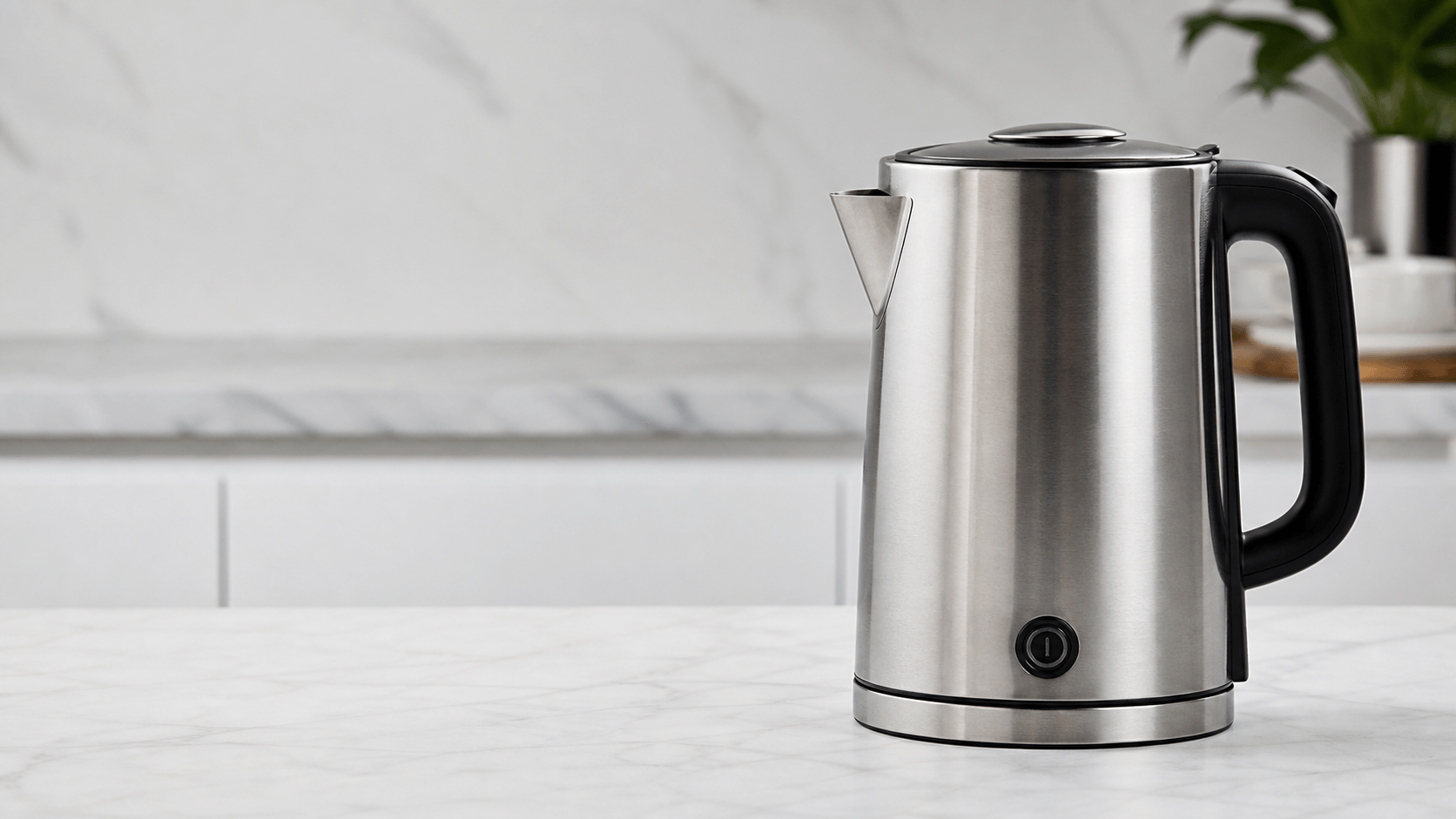
Many kettle projects run into trouble at the sample stage. The product may look right in photos, but the sample reveals plastic in the hot-water path, unclear stainless steel specifications, or packaging that does not suit your retail channel. For supermarkets, wholesalers, importers, and private-label teams, that creates more than a quality issue. It can also lead to returns, compliance delays, and weaker shelf performance.
That is why your quotation request should start with specifications, not just price. Before you shortlist a stainless steel electric kettle supplier, you need a checklist covering food-contact materials, hidden components, voltage and plug requirements, safety functions, carton standards, and branding details. Clear requirements make supplier replies easier to compare and reduce the risk of vague promises during sampling.
If you are reviewing options for electric kettle wholesale, the quickest way to reduce sourcing mistakes is to ask for exact specifications instead of broad claims such as “food grade” or “no plastic.”
A reliable stainless steel electric kettle supplier should be evaluated by verifiable specs: stainless steel grade, food-contact construction, hidden plastic parts, voltage and plug options, safety functions, and retail packaging details. For B2B buying, the right supplier is the one that can clearly document these points for your market and support your sample approval process.
Which material details should you verify first?
Material claims are often where buyer-supplier misunderstandings begin. Ask exactly which stainless steel grade is used for the inner body, inner lid area, spout filter, and any other food-contact parts. Your quotation should clearly separate outer decorative material from the parts that actually contact water.
For stainless steel kettles, many buyers want written confirmation on inner liner construction, weld quality, and whether water touches only stainless steel during boiling. If your market positions the product as premium or health-focused, this will affect both your product listing and your return risk.
Ask for these details in writing:
- Stainless steel grade for all food-contact parts
- Whether the interior is single-wall or double-wall
- Whether the heating plate is exposed or concealed
- Whether the lid underside includes non-metal food-contact parts
- Whether the water level window is internal or external
You can review available stainless steel electric kettle models by checking whether the supplier presents these specs clearly rather than relying on broad marketing descriptions.
How should you check no-plastic claims before approving samples?
“No plastic” is often used loosely in kettle sourcing. Some suppliers use it to mean the interior looks stainless steel, while others mean no plastic touches hot water. Those are very different claims, so you should confirm the exact definition before sample approval.
Pay attention to the parts buyers often miss: lid inner ring, steam path components, spout filter frame, temperature sensor housing, and seal locations. A kettle may have a stainless steel body but still use plastic near steam or hot water flow.
| Checkpoint | What to Ask | Why It Matters |
|---|---|---|
| Inner lid construction | Is the underside full stainless steel or mixed material? | Prevents unclear no-plastic claims |
| Spout area | Does hot water contact any plastic before pouring? | Important for premium retail positioning |
| Handle assembly | Which parts are heat-insulated and which are decorative? | Helps assess safety and durability |
| Seals and gaskets | Where are silicone or other non-metal parts used? | Clarifies real food-contact structure |
| Steam path | Are there hidden plastic components near steam release? | Reduces sample-to-mass-production surprises |
This checklist is especially useful if your retail buyers ask for “100% stainless steel” wording. Your product copy should match the actual construction, not assumed terminology.
Which performance specs matter most for wholesale orders?
Product photos help you shortlist models, but wholesale success depends on specification fit. Capacity, rated power, and voltage need to match your channel, price band, and end-user expectations.
For example, supermarkets may prefer mainstream capacities with broad household appeal, while online sellers may want compact models for travel or smaller kitchens. Importers should also confirm whether the same design supports multiple voltage versions, such as 220-240V or 110-120V, and whether plug types can be adapted for the destination market.
Before you request a quote, confirm:
- Available capacities, such as compact, standard, or family-size options
- Rated wattage for each voltage version
- Auto shut-off and boil-dry protection details
- Base type, cord storage, and 360-degree rotation if required
- Sample performance consistency across different voltage versions
Boil speed should be reviewed together with wattage, not as a stand-alone claim. That gives you a more realistic basis for comparison and helps avoid overpromising in your sales materials.
Do you need temperature control and what safety points should be checked?
Not every market needs variable temperature control, but some retail channels expect it for tea, coffee, or premium kitchen assortments. If temperature presets matter for your program, ask how the settings are displayed, what control interface is used, and whether hold-warm is included.
Safety details should also be part of your quotation checklist, especially for supermarket and distributor projects. Confirm the operating logic for auto shut-off, boil-dry protection, lid locking method, handle heat resistance, and external surface temperature during normal use.
If your market requires specific compliance testing or labeling, ask suppliers what buyer-side documents they can prepare for review. Compliance marks such as CE, CB, RoHS, LFGB, ETL, or UL should be treated as items to verify for your market, not default assumptions. You should also confirm rating label content, warning text, and manual language before packaging approval.
What packaging and private label details should importers confirm early?
Retail-ready sourcing is not only about the kettle itself. It also includes gift box quality, export carton strength, barcode placement, manual language, and shipping protection. Weak packaging can turn an otherwise suitable product into a costly landed result.
Ask for a full packing specification sheet covering product size, gift box dimensions, carton packing quantity, and carton construction. For online sellers, outer carton durability matters even more because parcel handling is usually rougher than palletized supermarket delivery.
Key buyer variables to confirm include:
- Voltage and plug type for each target market
- Gift box artwork and private-label print areas
- Manual language versions and warning statements
- Carton strength for retail, wholesale, or e-commerce shipment
- Barcode, FNSKU, or shipping mark placement if needed
- Spare parts or replacement base availability for after-sales planning
If private label is part of your project, review OEM and ODM options early so branding, packaging, and sample approval can move together instead of causing delays later.
When is the right time to discuss OEM/ODM customization?
Customization works best after your core specifications are fixed. If material structure, voltage version, plug type, and safety functions are still open, branding discussions often take extra time because the product setup may still change.
You should move into OEM or ODM discussions once you have defined your target market, price range, retail channel, and packaging style. At that stage, your request can be much clearer: logo method, housing finish, color options, control panel language, gift box design, and manual format.
A stainless steel electric kettle supplier should be able to discuss customization in a structured way, usually starting with standard models and then narrowing into private-label adjustments. If you are building a broader kettle range, it is also useful to review the supplier’s electric kettle supplier lineup before deciding whether one platform can support multiple SKUs.
What is the best way to evaluate a stainless steel electric kettle supplier quickly?
Start with a one-page spec checklist instead of a general price inquiry. Ask for stainless steel grade, full food-contact material details, voltage and plug options, auto shut-off, boil-dry protection, packaging specs, and sample approval steps. This gives you comparable answers fast and helps you filter out suppliers that rely on vague descriptions.
Is there really an electric kettle with no plastic?
Some models are designed so no plastic touches hot water, but buyers should verify what “no plastic” means in each case. Check the lid underside, spout path, filter frame, steam path, and hidden internal parts. A supplier should explain exactly where non-metal components are used so your product claims stay accurate.
What stainless steel specs should importers prioritize for retail kettles?
Focus first on stainless steel grade for food-contact parts, inner liner construction, concealed heating design, and whether hot water touches only stainless steel. Then confirm wattage, voltage, plug type, auto shut-off, boil-dry protection, and packaging quality. These factors affect safety perception, market fit, and your after-sales risk more than appearance alone.
Should I request temperature control on every stainless steel electric kettle order?
Not always. Temperature control adds value in premium tea, coffee, or specialty retail channels, but standard boil-only models may be more suitable for entry-level wholesale distribution. Choose based on your target market, price positioning, and user expectation. Ask suppliers whether the same design platform offers both standard and temperature-control versions.
A good sourcing result usually comes from tighter specification control, not from the lowest initial quote. By checking materials, hidden components, voltage fit, packaging, and private-label details early, you can choose a stainless steel electric kettle supplier with fewer surprises during sampling and mass production.
If you want to discuss wholesale or OEM/ODM options for your kettle program, you can send your specification list through the contact page.
Need Electric Kettle Options for Your Market?
Send your target market, quantity, voltage, plug type, logo and packaging requirements. Laiina can help you compare suitable models and prepare a clearer B2B quotation before you confirm your order.