 LAIINA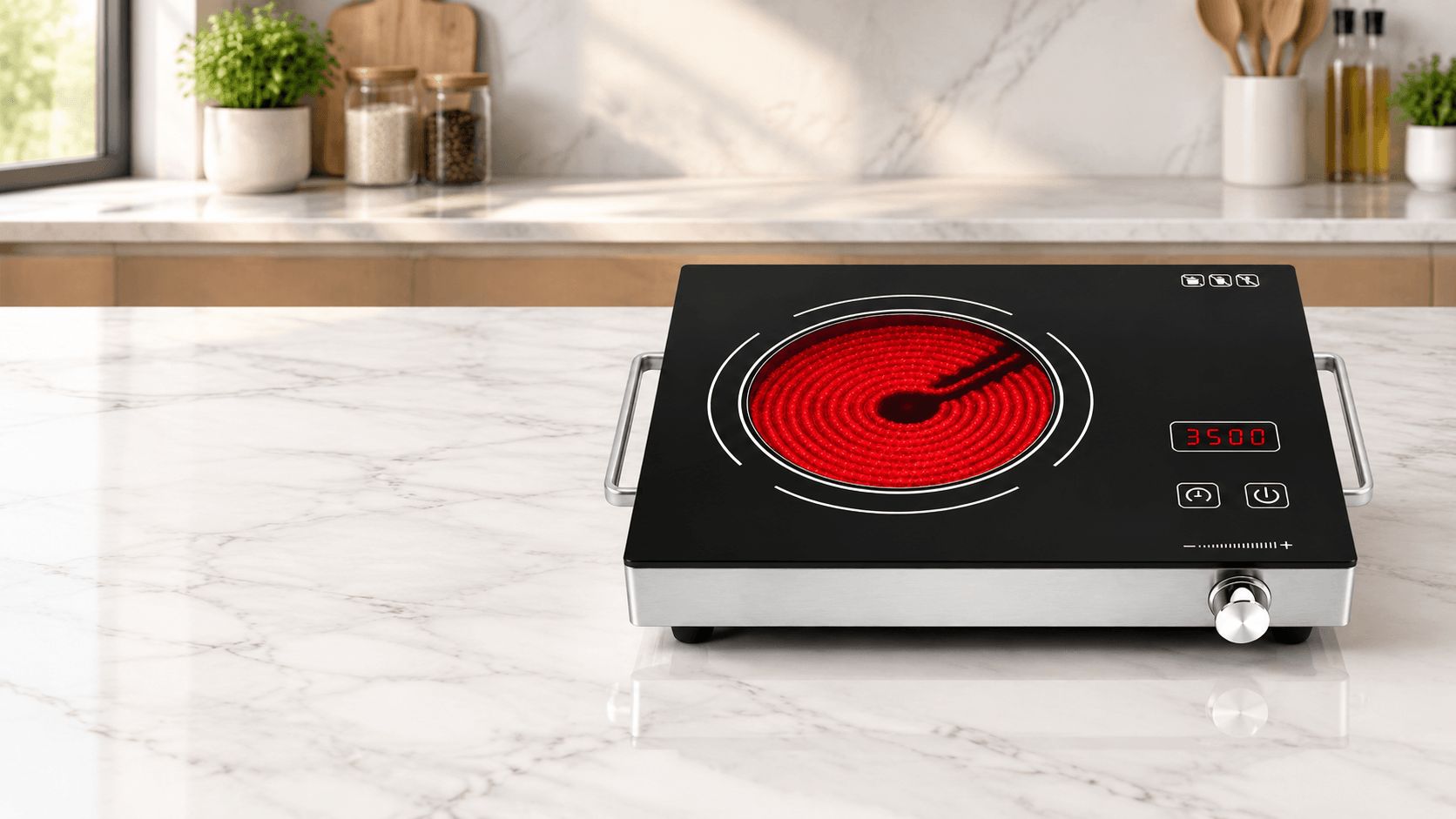
A low hot plate unit price can become an expensive order if the export carton, pallet plan, freight basis, and destination charges are unclear. Two suppliers may quote the same quantity but use different units per carton, resulting in different shipment volumes and landed costs.
Before approving mass production, ask each supplier to price the same product configuration and support the quotation with carton dimensions, gross weight, packing method, shipping terms, and destination assumptions. You can then compare hot plate wholesale shipping cost on the same basis.
For a comparable bulk quotation, provide the exact model, quantity, destination port or address, packaging format, branding requirements, and preferred shipment method. Ask for separate lines covering the product price, export carton or custom packaging, carton data, freight, insurance, origin charges, destination charges, and applicable Incoterm.
Approve the quotation only after the carton sample or packing specification matches the dimensions and weight used in the freight calculation.
What Should You Fix Before Asking for a Hot Plate Quote?
A request such as “send your best price for hot plates” leaves too many cost variables open. Prepare one buying scenario that every supplier must price. Include the selected model, quantity, units per shipment, destination country, receiving port or delivery address, and whether the order uses standard or branded packaging.
If you are still comparing models, request a separate quotation for each configuration instead of asking for one average price. Wattage, shell material, control type, and product size can change carton dimensions, protective packing, and shipping classification.
You can first review suitable products in Laiina’s hot plate and induction cooker range, then send the supplier a structured RFQ. Ask whether the quoted bulk hot plate MOQ applies to the standard product, custom packaging, or both.
Which Packing Details Should the Supplier Prove?
Treat packaging as quotation evidence rather than an assumption. Request the inner packing method, master carton quantity, carton dimensions, net weight, gross weight, carton material, and details of corner protection or palletization. A photo, packing diagram, or approved sample can help confirm that the carton data reflects the shipment you plan to place.
For private label orders, confirm whether the export carton is also the retail carton or whether both are required. If you need artwork, color printing, inserts, labels, manuals, or extra protective materials, request each charge separately. For OEM or ODM work, record these requirements in the project brief and review Laiina’s OEM/ODM cooperation information before requesting a final quotation.
| Evidence to request | Why it affects your comparison | Approval point |
|---|---|---|
| Units per master carton | Changes carton count and total shipment volume | Matches your planned order quantity |
| Carton length, width, and height | Influences cubic volume and freight rating | Confirmed against a packing sample or drawing |
| Net and gross weight | May affect freight, handling, and load planning | Clearly labeled as product or packed weight |
| Inner and outer protection | Helps assess damage exposure during handling | Included in the quoted packing method |
| Custom packaging charges | Prevents branding costs from being hidden in the unit price | Shown as a separate line or defined as included |
How Can You Compare Freight Offers Properly?
A hot plate freight quotation is useful only when its assumptions are visible. Give each supplier the same shipment quantity, destination port or address, preferred shipping method, and requested quotation validity. Ask whether the offer is based on EXW, FOB, CIF, DAP, or another Incoterm. Also identify who pays for export handling, main carriage, insurance, customs clearance, duties, taxes, and final delivery.
EXW can show a lower supplier-side offer because collection and export processes are left to you. FOB generally requires the supplier to arrange delivery to the named loading port. A delivered offer may include more destination services while still excluding duties or taxes. These prices should not be compared as though they cover the same cost range.
For container shipments, request the estimated carton count, total cubic volume, total gross weight, and loading assumptions. For smaller shipments, ask whether the quote uses chargeable weight, actual weight, or volume. This explains why freight offers can differ even when the product quantity is identical.
How Should You Calculate the Landed Cost?
Calculate your hot plate landed cost from comparable cost lines, not from the unit price alone. Build a worksheet for each supplier and keep origin, transport, destination, and potential risk costs separate. If a cost cannot be confirmed because the destination or shipment plan is still open, mark it as pending rather than treating it as zero.
A practical worksheet can include:
- Product price multiplied by the confirmed order quantity.
- Standard export carton, inner pack, pallet, or custom packaging charges.
- Origin pickup, export documentation, terminal, and handling charges where applicable.
- Main freight, insurance, customs clearance, duties, taxes, and delivery to your warehouse where applicable.
- Inspection, storage, rework, or damage allowance if required by your purchasing policy.
Use the same currency and measurement units throughout the comparison. Record the quotation date, validity period, assumed exchange rate, and whether each charge is estimated or fixed. This gives you a more reliable margin calculation when freight or destination costs change.
What Should You Approve Before Mass Production?
Before releasing mass production, compare the approved product sample with the quotation file. The model, rated specification, accessories, inner protection, carton quantity, carton markings, and packaging dimensions should describe the same shipment. If the final packing arrangement changes, request an updated freight and cost calculation.
Confirm the named shipping point and destination point in writing. Ask who is responsible if cartons require repacking, the shipment exceeds the stated weight, or destination charges are billed separately. These checks reduce the risk of a mismatch between the approved sample and the commercial shipment.
When you compare bulk hot plate options, keep the evidence file with the quotation, packing confirmation, and shipping assumptions. A documented approval trail gives your purchasing team a clearer basis for supplier selection and wholesale margin planning.
FAQ: Bulk Hot Plate Quotation and Shipping
Are export cartons normally included in a hot plate unit price?
They may be included in a standard quotation, but you should not assume this. Ask whether the unit price includes inner packaging, the master export carton, carton printing, manuals, labels, pallets, and protective materials. Request a separate line for custom packaging so you can see whether branding or stronger protection changes the quoted product price.
Which hot plate details affect carton volume most?
The main variables are product dimensions, accessories, handle or control-panel design, inner protection, units per carton, and pallet configuration. A different quantity per master carton can change total cubic volume even when the product itself is unchanged. Confirm the packed carton dimensions and gross weight for the exact model and packaging version you intend to order.
What destination information should accompany a freight request?
Provide the destination country, port or full delivery address, shipment quantity, preferred transport mode, and whether you need port delivery or warehouse delivery. If available, include your customs broker’s requirements and the receiving location. Ask the supplier to state which origin and destination charges are included, excluded, estimated, or payable by you.
How can I compare EXW, FOB, and delivered hot plate offers?
First, convert every offer to the same cost boundary. Add collection, export handling, main freight, insurance, clearance, duties, taxes, and final delivery when they are excluded. Then record the named place for each Incoterm and confirm whether the delivered price includes duties and taxes. The lowest unit price is not necessarily the lowest comparable landed cost.
Accurate hot plate wholesale shipping cost starts with one fixed order scenario and evidence that the approved packing matches the quoted shipment data. Send Laiina your model, quantity, packaging plan, destination, and preferred shipping terms through the B2B inquiry page to request a quotation structured for comparison.
Need Hot Plate / Induction Cooker Options for Your Market?
Send your target market, quantity, voltage, plug type, logo and packaging requirements. Laiina can help you compare suitable models and prepare a clearer B2B quotation before you confirm your order.