 LAIINA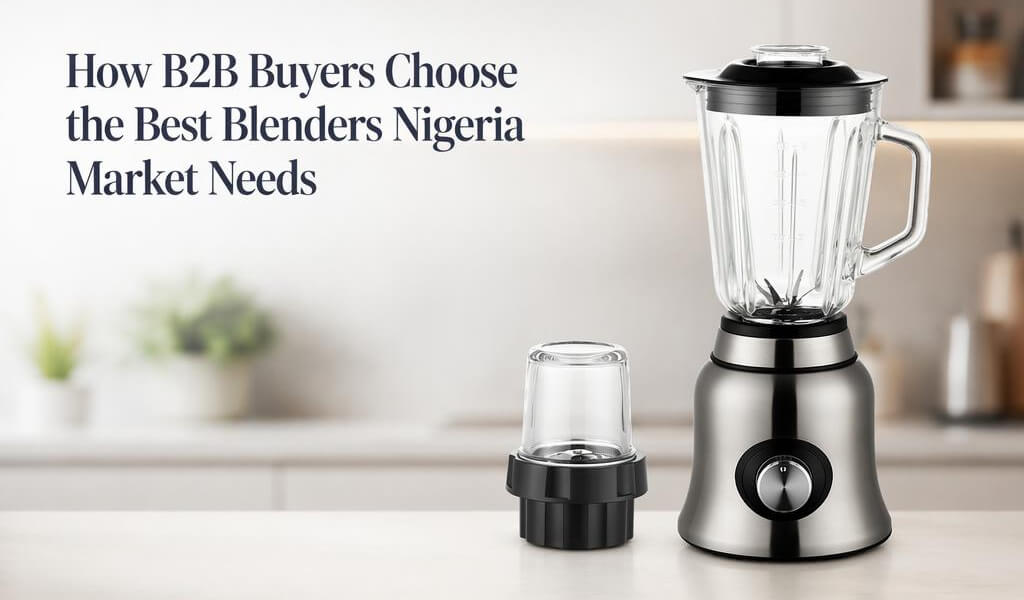
For importers, distributors, and private label buyers, choosing the best blenders Nigeria market needs is not only about price. It is about matching local cooking habits, voltage requirements, packaging expectations, and after-sales planning with a reliable supplier.
Nigeria has broad demand for blenders used for smoothies, pepper, beans, soup ingredients, and daily food preparation. That means B2B buyers should compare jar size, motor configuration, blade design, spare part planning, and carton setup before placing a wholesale order.
If you are comparing options for retail, supermarket supply, e-commerce, or brand distribution, start by reviewing a focused kitchen blender supplier range and request a quotation based on your target segment, not on online price listings alone.
The best blenders Nigeria buyers usually choose are models that balance practical motor performance, suitable jar capacity, correct voltage and plug options, durable blades, and retail-ready packaging. For B2B sourcing, the right choice depends on your customer segment, target price band, and whether you need wholesale stock models or OEM/ODM private label supply.
What defines the best blenders Nigeria buyers actually want?
In B2B purchasing, “best” usually means the model that sells steadily, fits local use, and creates fewer after-sales issues. A blender that looks strong on a marketplace page may still be the wrong product if the configuration does not match importer needs.
For Nigeria, buyers often focus on countertop jug blenders that can handle family use and ingredient prep. That includes demand for blending pepper, tomatoes, fruits, beans, and dry or semi-wet food tasks, depending on the blade and jar system.
When reviewing models, ask for clear specifications on rated power, jar material, speed settings, pulse function, blade material, lid design, and accessory options. Good sourcing decisions come from specification clarity, not only marketing terms.
Key wholesale checks before selecting a blender supplier
Before choosing a supplier or manufacturer, importers should confirm whether the product fits their channel: supermarket, traditional wholesale, appliance store, online marketplace, or brand distribution. Each channel may need different packaging, bundle configuration, and price positioning.
It is also important to check whether the supplier can support OEM, ODM, or private label work if you want to build your own brand. If branding is part of your plan, review the available OEM/ODM options early so you can align carton design, user manual, color box, and product appearance with your market strategy.
| Buyer checklist | What to confirm |
|---|---|
| Voltage and plug | 220-240V, plug type, cord length, local compatibility |
| Product positioning | Entry, mid-range, or premium retail segment |
| Jar and blade | Capacity, material, blade type, wet/dry suitability |
| Packaging | Color box, master carton, barcode, manual language |
| Quality check | Pre-shipment inspection points and sample approval |
| Compliance | Ask what test items or market requirements apply to your destination |
| After-sales | Spare parts, replacement policy, support process |
For compliance, buyers may ask suppliers about checklist items relevant to the destination market, such as CE, CB, RoHS, LFGB, ETL, or UL where applicable. These should be handled as product verification points based on market requirements, not assumptions.
Specifications importers and distributors should compare
The best blenders Nigeria distributors select often have practical capacity and easy-to-understand features. Popular configurations usually include household jug blenders with multiple speeds, pulse control, and attachments that support broader kitchen tasks.
For B2B comparison, review these details carefully:
- Jar size that matches household demand and shelf positioning
- Blade structure for general blending versus tougher food prep
- Motor setup and whether usage guidance is clear for end users
- Housing material and finish for retail presentation
- Stability features such as feet design and lid locking approach
- Accessory combinations such as grinder cup or extra jar
If your buyers need a blender for beans, pepper, smoothies, or cooking prep, explain those use cases when requesting quotation. That helps the supplier recommend the right wholesale kitchen blender model instead of a generic option.
A broad wholesale kitchen blender selection can help importers compare practical designs for different sales channels and price levels.
Price, packaging, and private label planning for Nigeria
Many buyers start with price research, but wholesale purchasing should look at total landed value, not just unit cost. Carton size, loading efficiency, accessory count, packaging style, and claim management all affect the real cost of doing business.
For supermarkets and online sellers, packaging matters almost as much as the blender itself. Buyers should ask about color box dimensions, protective inserts, product photos, instruction manual layout, and whether packaging can be adapted for local branding or multilingual needs.
Private label buyers should also define early whether they need logo printing, carton customization, housing color changes, accessory combinations, or full ODM development. Even a simple OEM project works better when artwork, labeling, and approval steps are clarified before production planning.
For distributors, it is wise to request photos or videos of packed products, not only loose product samples. This helps evaluate shelf appearance and reduces surprises when goods arrive.
How to reduce quality and after-sales risk in blender sourcing
Blenders are high-use countertop appliances, so quality check planning is essential. Importers should define inspection points before mass production and again before shipment, especially for appearance, function, packaging, and accessory completeness.
Useful quality check points include power-on testing, speed switching, noise consistency, blade rotation, lid fit, jar seating, plug confirmation, barcode accuracy, carton marks, and drop-resistance of the packaging arrangement. A clear checklist helps both buyer and supplier work from the same standard.
After-sales planning should also be discussed in advance. Ask about commonly replaced parts, troubleshooting support, and the process for handling claims or product issues in the market. A supplier with a practical after-sales workflow is often a better long-term partner than one offering only a low quote.
FAQ: Sourcing the best blenders Nigeria buyers need
Which blender type is usually best for the Nigeria market?
For many importers and distributors, countertop jug blenders are the most practical choice because they fit daily household food preparation. The best option depends on your target segment: entry-level retail, mid-range family use, or stronger multi-function models. Buyers should check jar size, blade setup, voltage, and packaging before deciding which model fits their channel.
How should I compare blender prices for wholesale import?
Do not compare only online retail prices. For B2B buying, ask for quotation based on specification, accessory set, packaging, branding needs, and order structure. A lower unit price may come with weaker packaging or fewer accessories, which can affect marketability and after-sales cost. Compare total value, not just the visible product price.
Can I order private label blenders for my own brand?
Yes, many buyers look for OEM or private label supply when building a local appliance brand. You should confirm what level of customization is available, such as logo, color box, user manual, housing color, or accessory combination. It is also important to define approval steps for samples, packaging artwork, and production details before placing the order.
What should I ask a blender supplier before placing an order?
Ask about voltage and plug options, product specifications, packaging details, quality check process, spare parts support, and after-sales handling. If your market has compliance requirements, ask which testing or documentation items need to be reviewed for your destination. Also confirm whether the supplier can support wholesale stock models, OEM, or ODM depending on your business plan.
The best blenders Nigeria market demands are the ones that align with local usage, retail expectations, and your distribution model. For importers and brand owners, the smartest buying decision comes from checking specifications, packaging, quality control, and OEM/ODM support together.
If you are sourcing kitchen blenders for wholesale, distribution, or private label business, you can contact Laiina for a quotation and discuss suitable models for your target market.
Need Kitchen Blender Options for Your Market?
Send Laiina your target quantity, market, voltage, plug type, logo and packaging requirements for B2B quotation support.