 LAIINA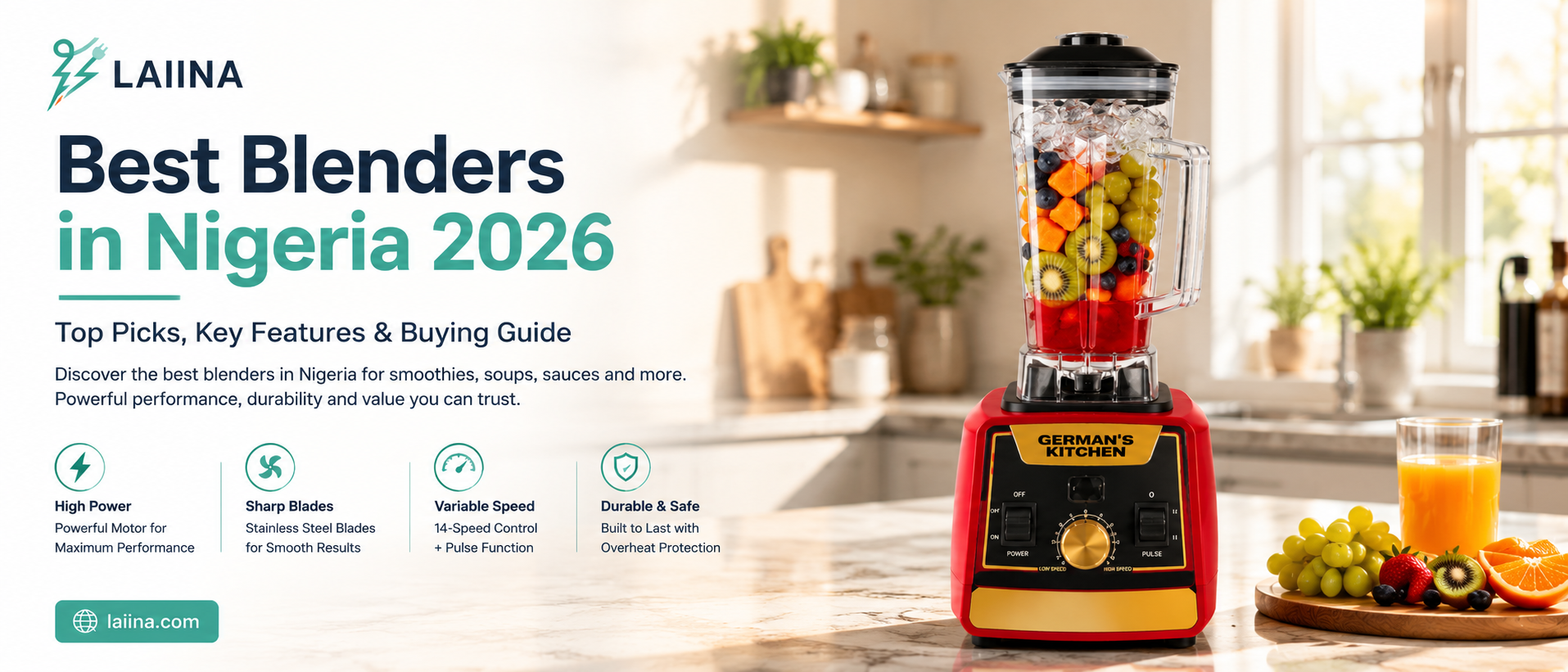
Nigeria is a strong market for household food preparation appliances, and blenders remain one of the most searched and purchased categories. For importers, distributors, supermarkets, and online sellers, the question is not simply which model looks attractive online. The real question is which blender specification matches local usage, price expectations, power conditions, and retail positioning.
If you are sourcing for the Nigerian market, this guide explains how to evaluate models, build a practical assortment, and communicate clearly with a kitchen blender supplier before placing an order. You can also review Laiina’s wholesale kitchen blender range to compare product directions for your market.
Why Blender Demand Stays Strong in Nigeria
Blenders are widely used for smoothies, pepper mix, tomatoes, beans, dry ingredients, and family meal preparation. That means B2B buyers often need more than a basic countertop unit. In many cases, the market prefers practical models with stronger motors, larger jars, easy cleaning, and clear value for money.
When selecting products for Nigeria, buyers usually compare:
- Everyday home-use blenders for supermarkets and retail chains
- Heavy-duty styles for stronger blending tasks
- Multi-function sets with grinder attachment
- Portable or compact options for online sales and gift channels
- Price-sensitive entry models versus premium-looking private label lines
The best product mix depends on your target channel, whether that is modern trade, open market distribution, ecommerce, or wholesale supply to local resellers.
How to Choose the Right Blender Range for Your Target Market
Not every blender that sells in one country will work in another. Nigerian buyers often assess both performance expectations and selling price carefully. Before requesting a quotation, define your market fit clearly.
| Buying Factor | What to Confirm | Why It Matters in Nigeria |
|---|---|---|
| Target customer | Budget, mid-range, or premium | Helps set motor level, jar type, and packaging standard |
| Main use | Smoothies, pepper, beans, dry grinding, general kitchen use | Prevents mismatch between performance and user expectation |
| Jar capacity | 1.5L, 2.0L, or other | Family-size preparation is a common buying point |
| Accessory set | Grinding cup, extra cup, portable cup, spare blade | Bundles can improve retail appeal |
| Price position | FOB target or landed cost goal | Keeps sourcing aligned with retail competition |
| Sales channel | Distributor, supermarket, online, wholesale | Different channels need different packaging and model strategy |
For many buyers, a balanced lineup works best: one entry model, one stronger family-use model, and one higher-value model with grinder or extra accessories.
Key Technical Specifications to Confirm Before Ordering
One of the most common sourcing mistakes is focusing only on appearance and price. For repeat orders and fewer after-sales issues, technical details should be confirmed early.
- Voltage: confirm the voltage requirement for your market before production.
- Plug type: specify the exact plug standard needed for Nigeria or your destination market.
- Motor level: align power expectations with actual household usage.
- Jar material: plastic or glass depending on price target and positioning.
- Blade design: suitable for wet blending, dry grinding, or combination use.
- Speed settings: basic rotary control or multi-speed options.
- Overheat protection or safety features: ask what is available for the selected model.
It is also wise to send a simple specification sheet when asking for quotation. This reduces back-and-forth and helps suppliers recommend suitable options from their food blender OEM collection.
Packaging, Branding, and OEM/ODM Considerations
For distributors and brand owners, packaging is not a minor detail. It affects shelf appeal, ecommerce conversion, and customs documentation consistency. If you plan to build a local brand, ask about available OEM/ODM support for logo, color box, manual language, and product appearance options.
Useful packaging points to confirm include:
- Logo placement on product and gift box
- Color box artwork requirements
- Manual language, such as English or bilingual versions
- Barcode, shipping mark, and carton label format
- Inner protection for jar and accessories
- Bundle configuration for grinder cup or extra jar
For online sellers, retail-ready packaging can be especially important because product photos, unboxing, and perceived value often influence conversion.
Quality Checking and Compliance Checklist for Buyers
Responsible B2B sourcing requires a practical quality control process. Instead of relying only on a photo catalog, buyers should confirm sample evaluation, production checks, and packaging review. If your market or channel needs specific compliance documents, treat them as part of your sourcing checklist and confirm availability in advance rather than assuming.
- Sample approval before bulk order
- Voltage and plug confirmation on final specification
- Jar, blade, and housing finish inspection
- Function test for blending and control operation
- Drop-test or carton review for transport protection
- Manual, label, and packaging content verification
- Spare parts discussion for blades, jars, lids, or couplers
- Checklist review for buyer-required standards such as CE, CB, RoHS, LFGB, ETL, or UL where applicable
For long-term import business, ask clearly about spare parts support and after-sales handling. Even simple items such as lids, jars, blades, or couplers can matter for customer satisfaction and repeat business.
How to Request a Faster and More Accurate Quotation
Many quotation delays happen because buyers send only a broad message like “send blender price.” A better approach is to provide the commercial and technical basics at the beginning. This makes model matching faster and helps avoid unsuitable offers.
Include the following in your inquiry:
- Target market: Nigeria or other destination country
- Product category: countertop blender, heavy-duty blender, or blender with grinder
- Estimated quantity
- Voltage requirement
- Plug type
- Packaging request
- Logo or private label requirement
- Manual language
- Target price range if available
MOQ should also be discussed early, especially if you need custom packaging or branding. Being clear from the start helps both sides move toward a realistic offer.
Inquiry Checklist for Blender Buyers
Send your target market, preferred blender type, quantity, voltage, plug type, logo request, color box details, manual language, and packaging needs to get a more accurate quotation.
Building a Strong Blender Assortment for Nigeria
If your goal is steady sales rather than one-off purchasing, think in terms of assortment planning. A practical range can help you cover multiple customer segments without overcomplicating inventory.
Many B2B buyers consider a structure like this:
- Entry level: simple household blender for price-sensitive retail
- Mid range: stronger motor and larger jar for family use
- Value-added model: blender plus grinder attachment or accessory set
This approach can work well for distributors, supermarkets, and ecommerce sellers because it offers clear trade-up choices. If you are evaluating current options, browse the wholesale kitchen blender category and shortlist models by usage, price band, and packaging fit.
Which type of blender is usually best for the Nigerian market?
That depends on your target segment. Budget retail may focus on basic household models, while distributors often prefer stronger family-use or blender-with-grinder combinations for broader appeal.
What should I send when asking for a blender quotation?
Include your target market, product type, quantity, voltage, plug type, logo need, packaging requirement, and manual language. This helps the supplier recommend suitable models and provide a clearer quotation.
Why are voltage and plug details important in blender sourcing?
They directly affect market suitability and customer safety. Confirming them before production helps avoid costly mismatches and returns.
Can I order blenders with private label packaging?
Yes, many B2B buyers request logo printing, custom color boxes, and manual adjustments. Requirements should be discussed early, especially if MOQ applies to customized packaging.
What quality checks should importers focus on?
Sample approval, function testing, packaging review, finish inspection, and confirmation of labels and manuals are all important. Spare parts planning is also useful for after-sales support.
How do I choose between a low-price model and a heavy-duty model?
Start with your channel and end-user need. If your customers mainly want light daily use, an entry model may fit. If they expect stronger blending for tougher ingredients, a higher-spec model is usually the better choice.
Need Kitchen Blender Options for Your Market?
Send Laiina your target quantity, market, voltage, plug type, logo and packaging requirements for B2B quotation support.