 LAIINA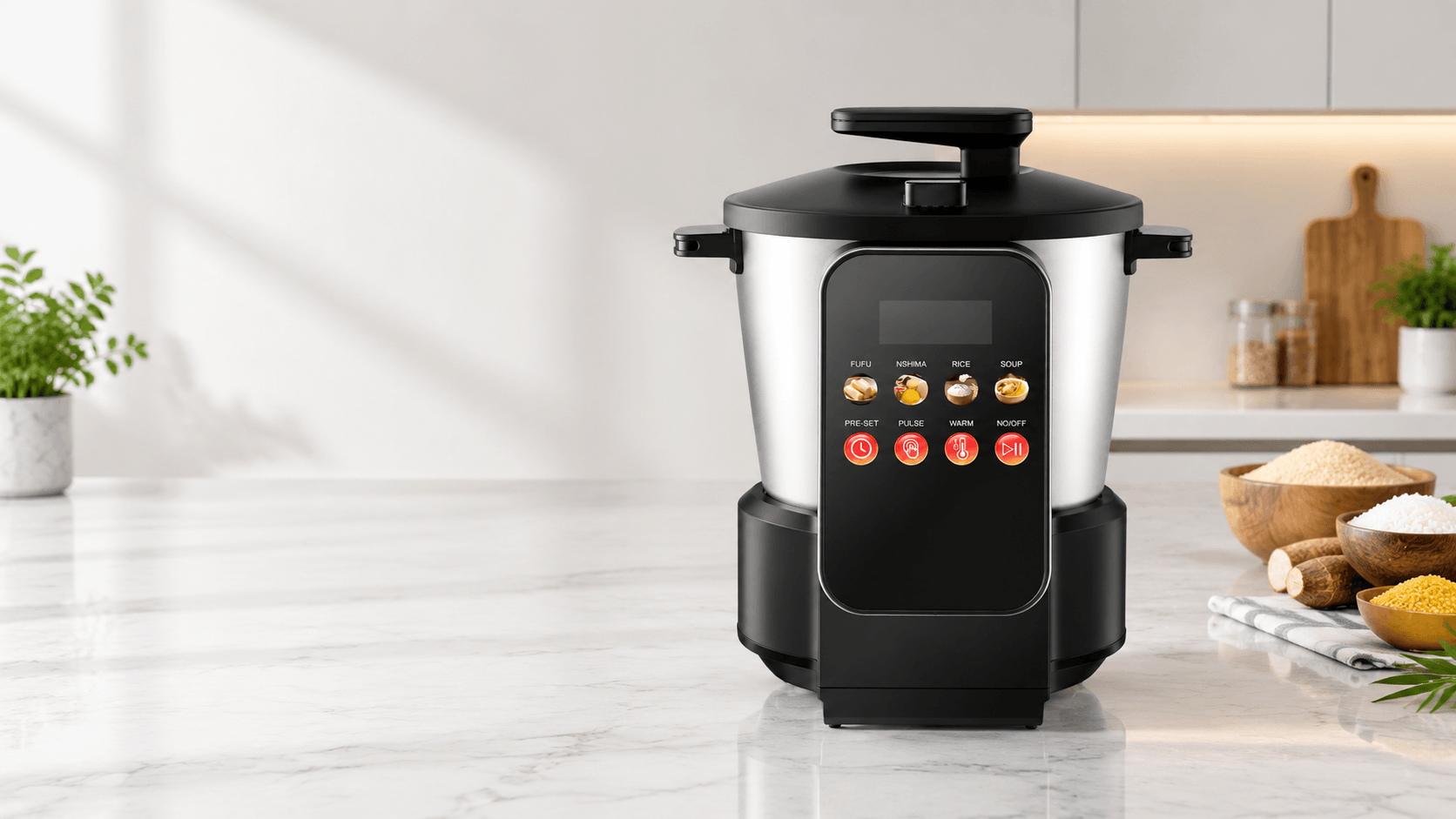
A bulk fufu machine order can reach your warehouse with avoidable problems if the approved sample uses one carton configuration and production uses another. Missing accessories, crushed export cartons, unclear shipping marks, or inconsistent packing data can delay receiving and create disputes after arrival.
Before confirming an order, treat packaging as part of the commercial specification. Approve the physical pack-out, carton data, labels, accessory count, and shipment records together. A phrase such as “standard export packing” does not give your receiving team enough information to check the shipment.
This guide gives you a practical way to review fufu machine wholesale packaging for import and wholesale shipments. The aim is to document the decisions that matter before production and verify them before dispatch.
Approve the carton dimensions and material, inner protection method, unit contents, accessory quantity, shipping marks, and packing-list format before production starts. Before dispatch, require a check that compares the approved packaging record with the finished cartons, gross weights, carton counts, and shipping documents.
What Should You Approve Before Confirming the Order?
Start by defining what one sellable unit contains and how that unit is protected. Ask for a packaging diagram or clear photos showing the machine, removable parts, manual, power cable where applicable, and any agreed spare items. Tie the exact contents to the model and purchase order instead of leaving them in informal messages.
For a mixed-model shipment, specify whether each model has its own carton code and packing method. This helps your receiving team identify stock quickly and prevents one shared carton description from concealing differences between configurations. You can review the relevant FuFu machine product range while preparing this model-by-model pack-out record.
Which Wholesale Packaging Risks Need a Control?
Rank each packaging risk by probability and impact, then assign one verification action. This turns a broad packaging discussion into an approval record that can be checked before the container is sealed.
| Risk | Probability | Impact | Verification action |
|---|---|---|---|
| Carton size or gross weight changes after quotation | Medium | High | Approve a model-specific carton data sheet and recheck finished samples. |
| Internal parts move during handling | Medium | High | Inspect the insert, foam, molded pulp, or divider fit around heavy and projecting parts. |
| Accessories or manuals are incomplete | Medium | Medium | Count every item against a signed unit-content checklist. |
| Shipping marks cannot identify cartons | Medium | Medium | Approve artwork, placement, carton numbering, and model codes before printing. |
| Packing list does not match loaded cartons | Low to medium | High | Reconcile carton count, quantity, net weight, gross weight, and model breakdown before dispatch. |
Prioritize risks that are difficult to correct after loading and likely to affect receiving. If your market or logistics provider has additional handling, marking, or documentation rules, add them to the same matrix and request written confirmation.
How Much Protection Does the Export Pack-Out Need?
For each export carton, record the outside length, width, and height, carton quantity by model, units per carton, carton material description, and any agreed sealing method. Do not rely on dimensions from an early quotation if the final product or accessory set has changed.
Inspect the areas most likely to transmit impact: corners, motor or drive housing, control parts, detachable components, and surfaces that may rub against the carton. The inner protection should prevent movement without pressing against fragile surfaces. If your distribution channel requires a drop-test or handling standard, define the method, sample quantity, and acceptance criteria before production. The phrase “drop-test approved” does not have one universal meaning.
Make moisture protection explicit if the shipment may face humid storage or ocean transit. Confirm whether inner bags, desiccant, carton liners, or other measures are needed for your route and packaging design. These should be validated as order requirements rather than assumed to be part of a supplier’s standard packing.
Do the Carton Labels and Shipping Records Match?
Shipping marks should allow your warehouse to identify the shipment without opening every carton. A practical mark may include the consignee reference, purchase-order reference, model code, carton number, quantity, country-of-origin wording where required, handling symbols where appropriate, and a clear indication of mixed cartons if used. Confirm the exact text, print location, contrast, and language before carton production.
Ask for a draft fufu machine packing list showing model-by-model quantities, cartons, units, net weight, gross weight, and carton dimensions. The commercial invoice, packing list, shipping marks, and purchase order should use the same model names and quantity logic. If your market requires product labels, manuals, warnings, or conformity marks, provide the applicable artwork and legal instructions for review instead of assuming a generic label will be accepted.
For OEM or private-label packaging, approve the artwork version, barcode or SKU references, carton identification, and insert contents through a controlled file record. Laiina’s OEM/ODM cooperation page can be a starting point for discussing customization, but your packaging approval should remain specific to the confirmed model and destination.
What Evidence Should Release the Shipment?
Before dispatch, request evidence that supports reconciliation: photos of sealed cartons, readable shipping marks, the final carton count, selected carton measurements, and weights recorded by model. For a larger order, define how many cartons or units will be checked and how discrepancies will be handled before loading.
Compare this evidence with your approved packaging record. The review should confirm unit contents, inner protection, carton labels, carton numbering, pallet or container arrangement if applicable, and the final document set. You can use the fufu machine category when matching the approved model reference to the shipment paperwork.
Keep the signed packaging specification with the purchase order and sample approval. If the supplier proposes a material, dimension, accessory, or label change, require written approval before implementation. This gives both sides a clear decision trail and reduces arguments over whether a packing variation was authorized.
FAQ: Wholesale Packaging Decisions
What is the minimum packaging information to approve before ordering?
Approve the model code, units per carton, carton dimensions, carton material, gross and net weight fields, inner protection method, unit contents, accessory count, manual language, shipping marks, and carton numbering format. Also record whether models are packed separately or mixed. These details give your quotation, purchase order, inspection, and packing list one consistent reference.
Should spare parts be packed inside every fufu machine carton?
Not necessarily. The correct arrangement depends on your commercial agreement and distribution plan. If spare items are included, list each item and quantity in the unit-content record or in a separately identified master carton. Ask for photos showing their location and ensure the packing list distinguishes machine units from spare parts.
What should wholesalers request for carton labeling?
Request a proof showing the exact model reference, purchase-order reference, carton number, quantity, handling marks, and any destination-specific wording required by your logistics or import process. Confirm placement and readability on the actual carton. Do not approve labels only from text messages because small wording or numbering differences can complicate warehouse receiving.
How can you ensure the packing list matches the shipment?
Use the same model codes and quantity definitions across the purchase order, carton marks, invoice, and packing list. Before loading, reconcile carton count, units per carton, total units, net weight, gross weight, and dimensions by model. Request final photos or inspection records, then ask for immediate written correction if any figure differs from the approved record.
Well-documented fufu machine wholesale packaging gives you a clearer basis for quotation approval, receiving control, and pre-shipment inspection. Send Laiina your target model, destination, carton requirements, and labeling brief through the Laiina contact page to discuss a packaging specification for your wholesale order.
Need FuFu Machine / Meat Grinder Options for Your Market?
Send your target market, quantity, voltage, plug type, logo and packaging requirements. Laiina can help you compare suitable models and prepare a clearer B2B quotation before you confirm your order.