 LAIINA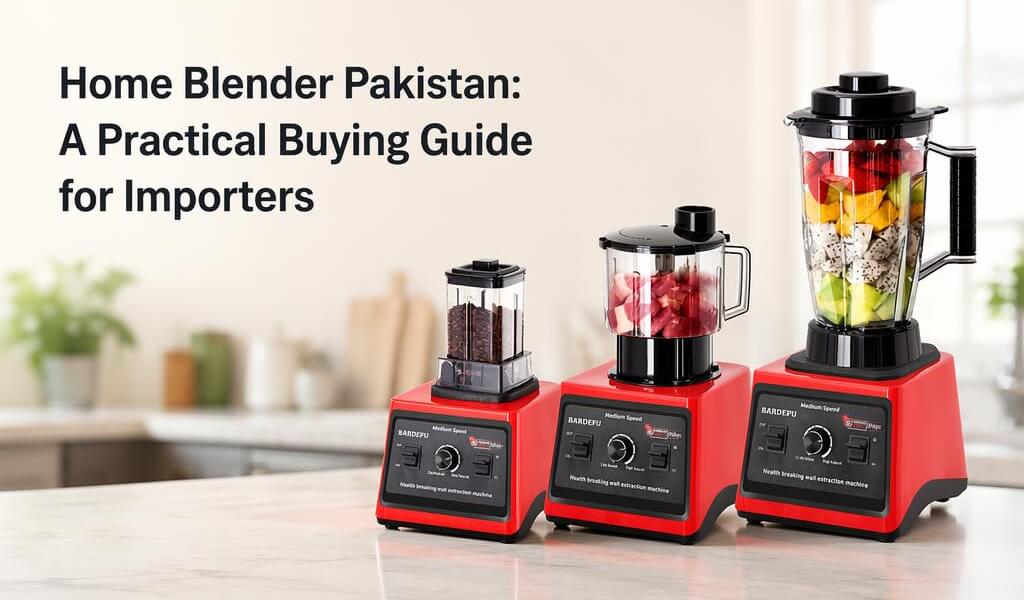
For importers and distributors, sourcing a home blender Pakistan product line is not only about price. The better decision usually comes from matching motor performance, jar material, voltage, plug type, packaging, and after-sales planning to your target retail channel.
Pakistan’s blender market includes demand from supermarkets, appliance stores, wholesalers, online sellers, and private-label brands. Buyers often need a practical balance between everyday household use, competitive pricing, and a product specification that fits local expectations.
If you are comparing models for wholesale, it helps to start with a clear product scope. Laiina’s kitchen blender supplier range can be reviewed by application, appearance, and sourcing needs before moving into quotation and sample discussions.
If you want to source a home blender Pakistan range for B2B resale, focus first on voltage compatibility, jar material, motor use case, packaging language, and spare-part expectations. A reliable buying process should also cover OEM/ODM options, quality check points, and clear agreement on accessories, plug type, and carton packing before mass order confirmation.
1. Define the right home blender Pakistan product position
Not every blender fits the same sales channel. A supermarket buyer may want simple family-use models, while an online seller may prefer feature-led products with stronger visual packaging. A distributor may need a wider price ladder to cover entry, mid-range, and promotional demand.
Before asking for a quotation, define your target user and expected retail band. This makes supplier communication faster and reduces back-and-forth on unsuitable models.
- Entry-level household blender: basic blending for juice, shakes, and light kitchen use
- Mid-range family blender: improved jar options, more stable base, broader daily-use appeal
- Multi-function package: blender with grinder or extra accessories for broader shelf appeal
- Private label range: customized branding, gift box design, and market-focused packaging details
For buyers building a broader assortment, reviewing a wholesale kitchen blender collection by function and appearance is usually more efficient than comparing only retail listings.
2. Key specifications importers should check before ordering
When evaluating a blender supplier or manufacturer, product specs should be tied to actual market use. A model may look attractive online, but B2B success depends on whether the technical setup fits customer expectations and local electrical standards.
The most important point for Pakistan-focused sourcing is practical compatibility. That includes household usage habits, local voltage needs, and packaging information that supports retail resale.
| Checkpoint | What to ask or confirm |
| Voltage | Confirm the voltage version required for your market and whether one or more options are available. |
| Plug type | Ask which plug configurations can be supplied and how they are packed. |
| Jar material | Check plastic or glass jar options, durability expectations, and user positioning. |
| Blade and function | Confirm intended use such as smoothies, dry grinding, light chopping, or daily family blending. |
| Packaging | Ask about color box, carton marks, manual language, barcode, and retail readiness. |
| Quality check | Clarify inspection points such as appearance, assembly, operation, and packing consistency. |
| Compliance checklist | For your own import process, ask what test or compliance documents may be needed, such as CE, CB, RoHS, LFGB, ETL, or UL depending on market requirements. |
These details are more important than broad marketing claims. A good quotation should clearly show model configuration, accessories, packing details, and any custom requirements requested by the buyer.
3. OEM, ODM, and private label for blender wholesale
Many B2B buyers searching for home blender Pakistan are not only looking for open-market products. They may also need private label packaging, branded manuals, product color adjustments, or a customized appearance for local distribution.
OEM usually suits buyers with an existing brand who want their logo, packaging, and product presentation applied to standard models. ODM is more suitable when the buyer wants deeper product differentiation, such as structure, styling, or feature changes, depending on project feasibility.
If your business model includes branding, marketplace sales, or exclusive distribution, discuss private label requirements early. Laiina’s OEM/ODM cooperation options can be considered when planning custom packaging, logo application, and product line development.
- Confirm where the logo will appear: product body, color box, manual, carton, or all of them
- Check packaging language and artwork approval steps
- Ask whether accessory combinations can be adjusted for your channel
- Define replacement-part and after-sales support expectations in advance
For importers, early alignment on OEM/ODM points helps avoid delay after sample approval.
4. Quality control and after-sales points that matter in Pakistan distribution
A blender order should not be assessed only by sample appearance. Importers and wholesalers should also ask how product consistency is reviewed before shipment. Even a practical household appliance needs stable assembly and clear functional checking.
Useful quality check items include motor operation, switch response, blade installation, jar fitting, appearance inspection, drop-risk packaging review, and accessory completeness. These points should be confirmed before shipment rather than after goods reach the destination market.
After-sales planning also matters. Distributors and online sellers should discuss spare parts, replacement handling, user manual clarity, and carton labeling, because these affect retailer feedback and repeat purchasing.
- Ask what inspections are performed before packing
- Confirm whether spare accessories can be ordered together
- Check carton marks for SKU identification and warehouse handling
- Make sure the instruction manual matches the model supplied
For a home blender Pakistan range, stable product presentation and manageable after-sales support are often as important as the initial unit price.
5. How to compare blender suppliers and request a useful quotation
Many buyers send broad inquiries and receive broad replies. A better method is to send a structured request so the supplier can quote accurately. This saves time and makes supplier comparison more realistic.
Your inquiry should include target model type, estimated order plan, voltage, plug requirement, packaging needs, logo request, and sales channel. If you serve supermarket chains, distributors, or e-commerce, mention that too, because it influences product and packaging recommendations.
A practical quotation request should ask for:
- Model photos or catalog references
- Main specifications and accessories
- Packaging details and carton information
- OEM/private label options
- Quality check process
- After-sales support approach
- Sample availability and next steps
If you are still comparing options, reviewing Laiina’s food blender OEM selection can help narrow down suitable models before formal RFQ discussion.
FAQ: home blender Pakistan sourcing questions
What should I check first when sourcing a home blender Pakistan product line?
Start with your target channel and user segment. Then confirm voltage, plug type, jar material, motor application, accessories, and packaging requirements. For B2B orders, it is also important to ask about carton marks, manual language, quality check points, and after-sales arrangements before approving samples or placing bulk orders.
Is OEM or private label a good option for blender importers in Pakistan?
Yes, if you want to build your own brand or supply exclusive products to distributors and retail channels. OEM or private label can include logo application, color box customization, manual branding, and packaging adjustments. Buyers should confirm artwork approval steps, accessory configuration, and product labeling details early to keep the sourcing process organized.
How can I compare blender suppliers beyond price?
Compare specifications, packaging, customization ability, communication clarity, and quality check process. A lower quoted price may not include the plug type, accessory set, or packaging standard you need. Importers should also review how the supplier handles samples, product consistency, and after-sales support for wholesale and distributor orders.
What documents or compliance points should buyers ask about for blender imports?
Requirements depend on your import market and sales channel. Buyers should prepare their own compliance checklist and ask what supporting documents may be needed for customs, retailers, or online platforms. Depending on destination requirements, this may involve items such as CE, CB, RoHS, LFGB, ETL, or UL as part of a buyer-side verification process.
Sourcing a home blender Pakistan range successfully means matching product specification, packaging, OEM/ODM needs, and quality control to your sales channel. A clear RFQ and a practical supplier discussion can reduce mistakes and improve wholesale planning.
If you are evaluating blender models for import, distribution, or private label development, you can contact Laiina here to discuss your inquiry.
Need Kitchen Blender Options for Your Market?
Send Laiina your target quantity, market, voltage, plug type, logo and packaging requirements for B2B quotation support.