 LAIINA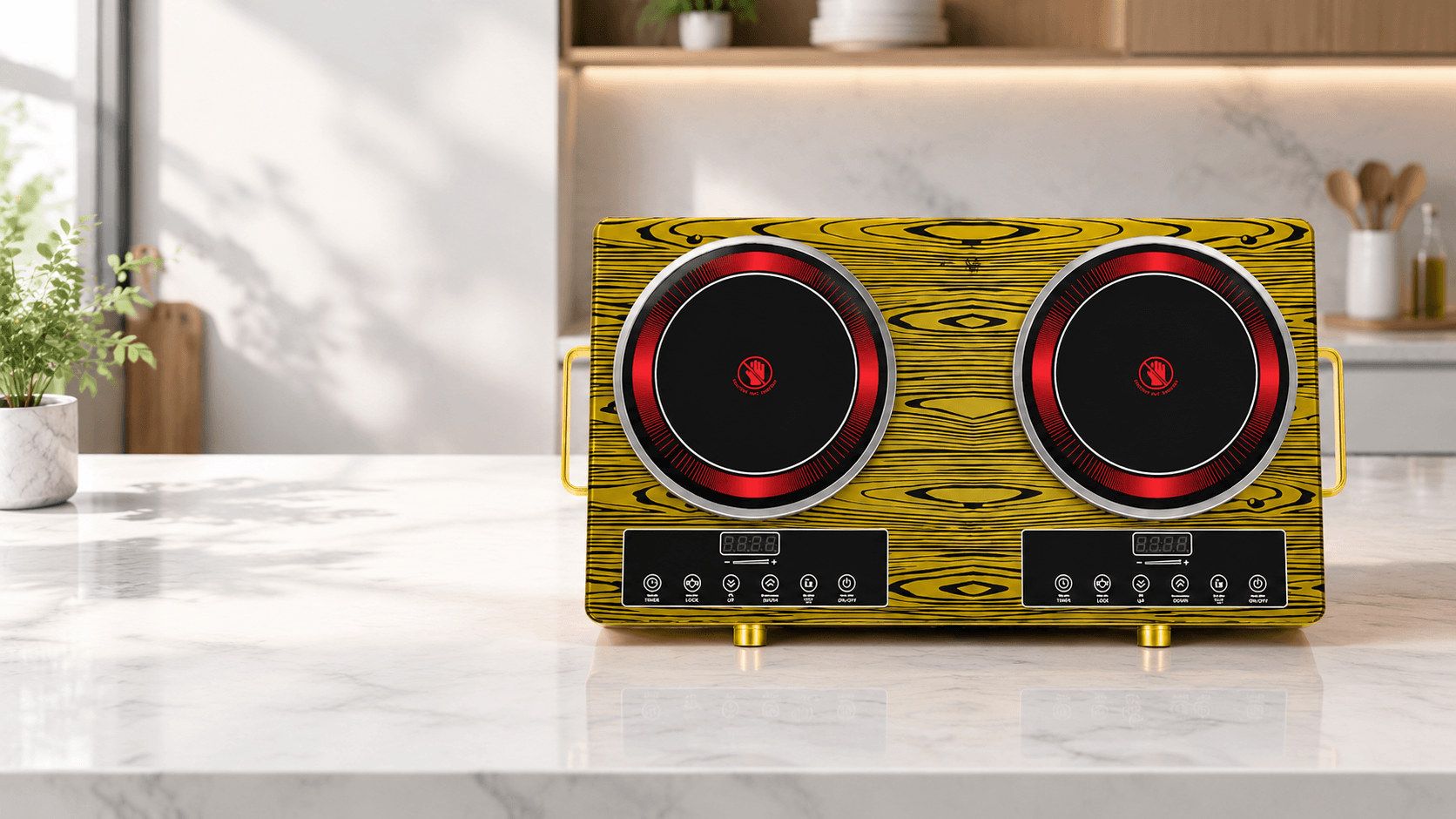
A product sketch showing a black glass surface and touch controls is not yet an OEM-ready brief. You need to decide whether the design is for a portable countertop cooker or a built-in format, whether the artwork changes only the appearance or also the control logic, and whether the panel fits the proposed housing and electronics. Clarifying these points early can prevent redesign work, unclear quotations, and samples that cannot be approved.
This guide shows how to prepare an induction cooker glass panel OEM request around those decisions. It focuses on the ceramic-glass panel, printed markings, control interface, and their relationship with the complete cooker rather than on consumer repair or replacement parts.
Before requesting an OEM proposal, define the cooker format, panel outline and dimensions, openings and edge treatment, heating-zone positions, control type, icon artwork, print colors, and approval tolerances. Then ask the OEM to confirm which details are cosmetic, which require tooling or electronics changes, and which must remain compatible with the existing cooker structure.
1. Which Cooker Format Are You Developing?
Start with the product decision that sets the boundaries for the rest of the project:
- Portable countertop model: define the complete top surface, visible controls, compact proportions, and power-cord position.
- Built-in format: confirm the relationship between the panel and housing, panel perimeter, control location, and any required cut-out information with the OEM. A visual drawing is not an installation specification.
- Single-zone or multi-zone design: expect differences in heating-zone graphics, available control space, and electronic layout.
Then decide whether your brand needs a limited private-label update or a more extensive custom induction cooktop panel. A logo, color adjustment, and revised control markings may be a limited artwork project. A new panel outline, hidden display, touch layout, or zone arrangement can affect tooling, electronics, housing, and sample costs. Record your preferred route before comparing proposals through Laiina’s induction cooker product range.
2. What Panel Geometry and Surface Finish Do You Need?
Give the OEM a dimensioned drawing instead of only a product photograph. Identify the overall length and width, thickness if known, corner radius, visible usable area, openings, sensor or display windows, and the relationship between the glass perimeter and housing. Ask the supplier to confirm which dimensions belong to an existing platform and which can be changed.
Set the surface direction before asking for a final quotation:
- Standard platform panel: use the OEM’s existing outline when development simplicity and platform compatibility are priorities.
- Brand-specific panel: request a feasibility review if the outline, corners, windows, or edge finish are distinctive.
- Visual-only change: retain the mechanical outline and revise the print, icons, or logo.
Specify the intended appearance, including black or another agreed color, gloss or matte effect, border treatment, and whether markings should remain visible when the cooker is off. Ask for the proposed ceramic-glass material description and any available dimensional or visual inspection criteria. “Quality glass” is not a sufficient specification; the quotation should state what the supplier is actually pricing.
3. How Will Users Read and Control the Cooker?
Choose the control interface for the way your target users will operate the product. A simple touch panel may suit a compact branded model, while a more detailed interface may need clearer zones, timer information, and function markings. Decide whether the controls use touch keys, a slider, knobs, or a combination, and show their order on a labeled layout.
For induction cooker silk screen printing, prepare artwork with exact icon names, language versions, brand position, color references, and the intended print area. Mark which symbols are required for operation and which are decorative. Ask whether the artwork is printed on the underside or another surface, how alignment is checked, and whether the proposed process can reproduce the required contrast and fine details.
Review the interface together with the electronics. Check that each icon sits above the intended sensor, that the display is visible from the expected user position, and that the heating-zone markings match the usable cooking area. A panel that looks correct on its own may still require a new layout or sample if it does not match the control hardware.
4. What Must the OEM Confirm Before Quoting?
Send a package that allows the OEM’s engineering team to check the visual concept against the cooker platform. Include the panel drawing, top-view artwork, control map, heating-zone map, preferred surface finish, and any reference images clearly labeled as visual inspiration rather than dimensional requirements.
Ask three direct questions: Can the requested panel fit the proposed housing? Can the printed controls align with the existing sensors and display? Does the change require a new mold, screen, tooling step, or electronics revision? The answers will show whether you are requesting a cosmetic adjustment or a genuine ceramic glass cooktop OEM development project.
| Buyer decision | Information to provide | Confirmation to request |
|---|---|---|
| Format | Portable or built-in; single or multi-zone | Compatible platform and housing relationship |
| Geometry | Length, width, corners, thickness, windows, edge finish | Feasible dimensions and tooling implications |
| Interface | Control type, icon order, languages, display position | Sensor, display, and artwork alignment |
| Appearance | Glass color, gloss level, border, logo, print colors | Available finish and inspection reference |
| Approval | Sample version, marked changes, acceptance tolerances | What becomes the production reference |
5. How Will You Control Sample Approval?
Define the inspection points before sampling. Review the panel outline, corner consistency, print position, icon clarity, logo scale, display visibility, heating-zone placement, and fit between the glass and housing. Use an annotated approval sheet with revision numbers so that visual changes do not disappear in email exchanges.
Ask the OEM to identify the sample status: visual prototype, engineering sample, or production-intent sample. Confirm which features are representative and which still require adjustment. If your brand may sell the product in several markets, prepare the required language and marking versions early. Ask the supplier to confirm any market-specific documentation or compliance requirements instead of assuming one panel design covers every market.
For a broader review of available hot plate and induction cooker models, compare each reference model by panel architecture and control layout. For private label, OEM, or ODM changes, review the OEM/ODM cooperation process and attach the same controlled brief to every inquiry.
FAQ
What artwork files should I send for a custom induction cooker panel?
Send a dimensioned top-view drawing and editable vector artwork for the logo, icons, text, and control markings. Include color references, language versions, print boundaries, and a clear revision number. A rendered product image can show the intended appearance, but it should not replace the dimensions or control map. Ask the OEM which file formats and print tolerances its engineering team needs.
Can I change the glass outline without changing the cooker?
Not necessarily. A changed outline can affect the housing, seals or supports, display openings, sensor alignment, and tooling. Ask the OEM to compare your requested dimensions with an existing platform and identify every affected component. For a lower-complexity project, preserve the platform outline and customize the printed zones, logo, colors, or control markings instead.
How should heating zones and controls appear in the approval drawing?
Show the heating-zone centers and boundaries together with every sensor, display, touch key, timer mark, and function icon. Use separate labels for visual graphics and electronic functions. This allows the OEM to check whether the printed interface sits above the actual control positions and whether users can read the display without confusing it with a cooking zone.
What should a brand owner approve before mass production?
Approve a numbered sample or production-intent reference against an annotated drawing. Check panel dimensions, corner shape, surface appearance, print alignment, icon clarity, logo placement, display visibility, heating-zone position, and fit with the housing. Request written confirmation of the approved artwork revision and ask which changes after approval would require new tooling, screens, or engineering review.
A clear panel brief lets you compare OEM proposals on engineering feasibility as well as appearance and unit price. Prepare your drawings, control map, and approval criteria before contacting Laiina about a customized induction cooker project through the inquiry page.
Need Hot Plate / Induction Cooker Options for Your Market?
Send your target market, quantity, voltage, plug type, logo and packaging requirements. Laiina can help you compare suitable models and prepare a clearer B2B quotation before you confirm your order.